Monthly Meeting - “Saving lives in the most challenging of circumstances”
Tuesday 10 February
Anne Artis rang the bell and started our February meeting with her warmth and enthusiasm overcoming the dreich weather outside! There’s lots to look forward to as a Rural member – Fintry Amateur Dramatic Society full length comedy production of “The Fairmer Wants a Wife” on Friday 1 May (although I am sure Ruskie members could share their own funny stories once the Fairmer GETS a wife!), SC&WP Quiz at Kippen on Monday 27 April, World Textile Day (dedicated to Sashiko) in Bridge of Allan on Saturday 23rd May, the Area Lunch on Sunday 14 June in Coupar Angus and an open meeting on the options for future of the Federation (in light of the pressure on finding replacements for the current office bearers) on Saturday 7 March in the Raploch Campus. Liz Black also has raffle tickets for sale for the National Gathering (where the Vaughn Nash competition will be judged), and is taking names for the Evelyn Baxter two day calligraphy class in October.
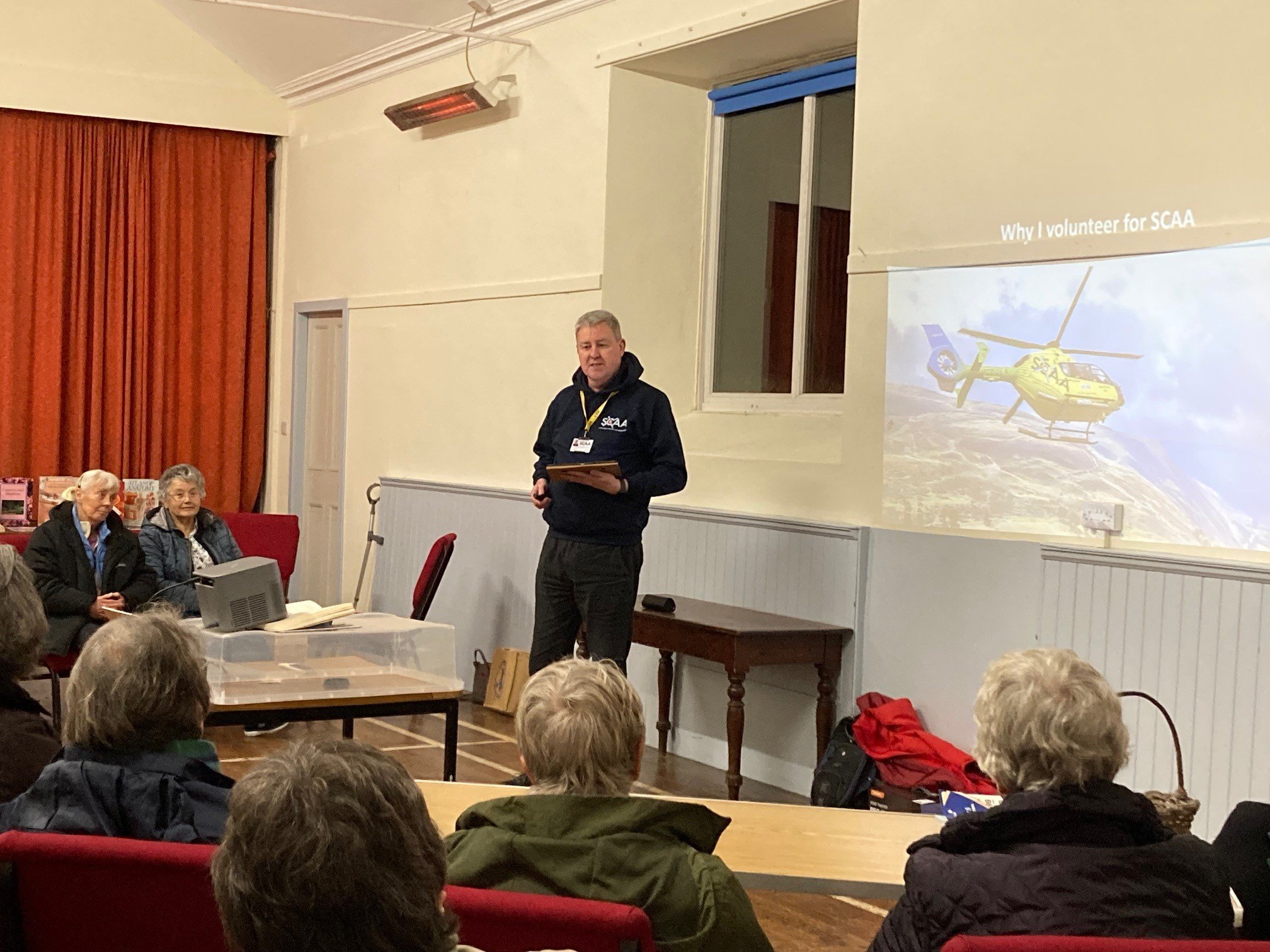
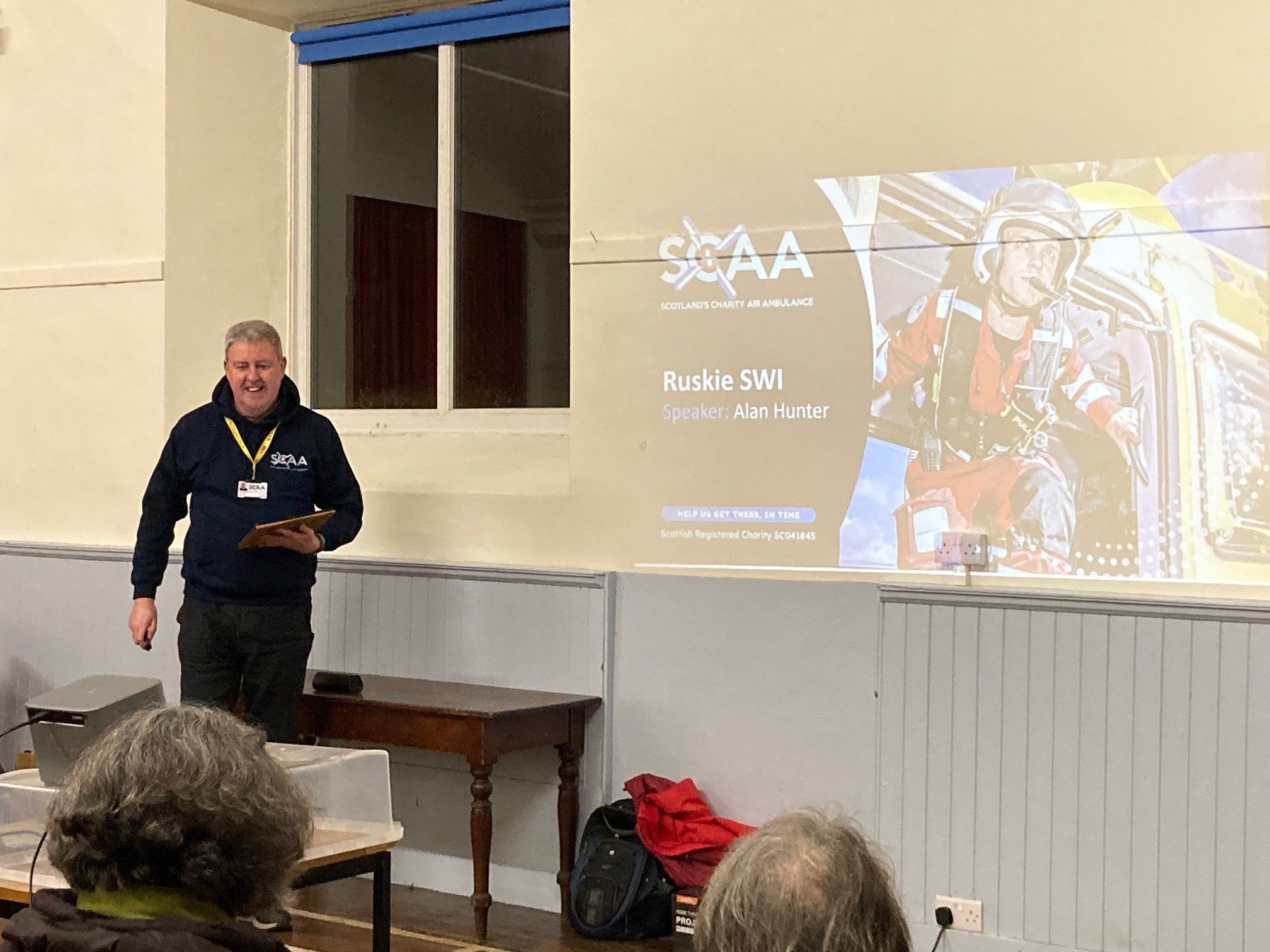
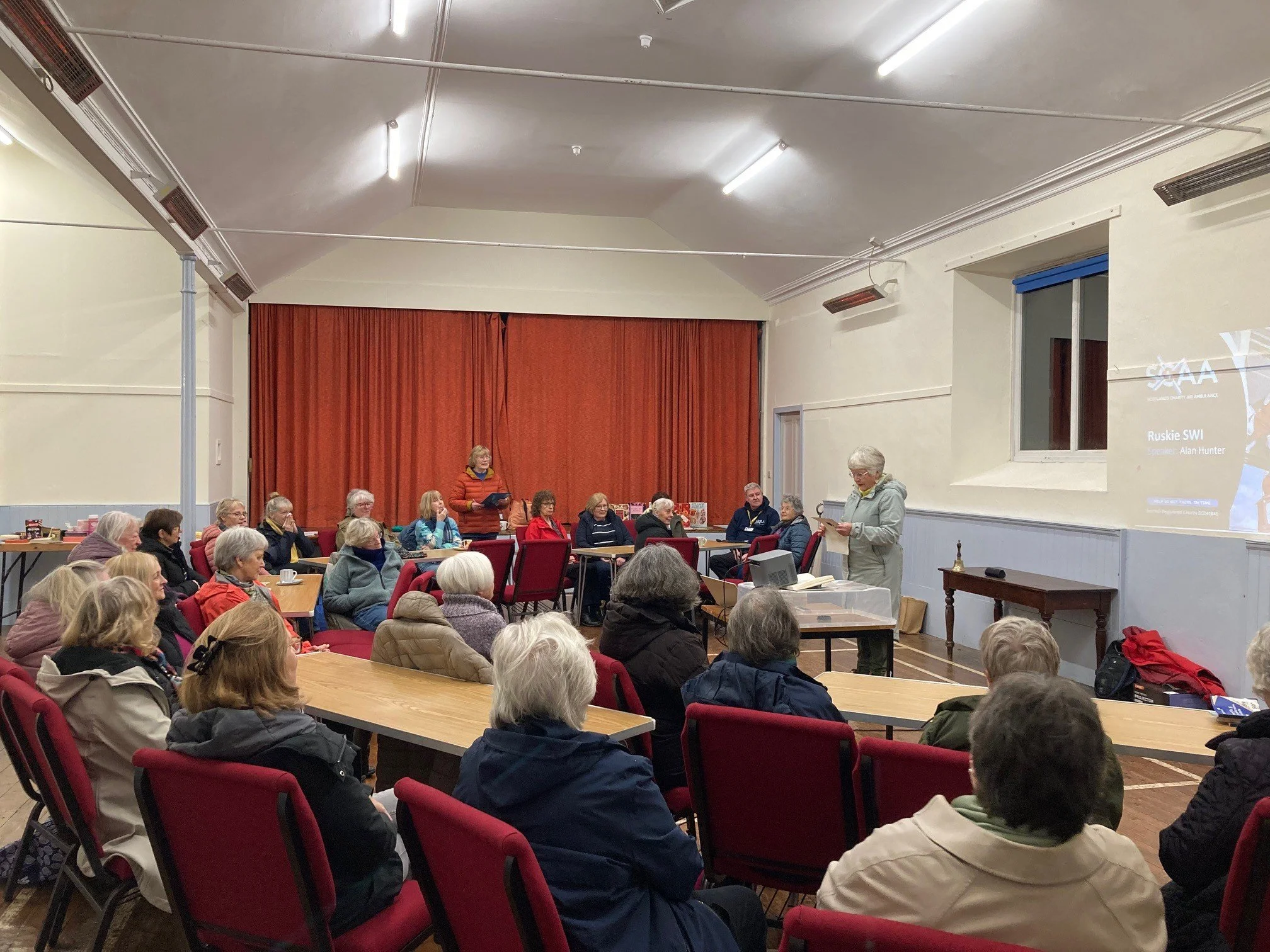
Anne reflected on the fun of the January Meeting but also commented that tonight is a more serious topic and an opportunity to learn about the Scottish Charity Air Ambulance (SCAA). Many of our members are familiar with SCAA, and one has even made use of their services! Alan Hunter is a volunteer speaker with SCAA and reminded us that Scotland is a beautiful place but has many remote locations and if people get sick then every minute matters and people can die if help is not available. Alan shared a video of motorcyclist Paul who benefitted from the SCAA service and took a 15 minute helicopter ride rather than wait 40 minutes for an ambulance to arrive then travel 1 hour by road to hospital, which meant his life-threatening injuries could be treated and he was saved. The SCAA ambition is that nobody in Scotland should die because help cannot get there in time. Speed saves lives - unfortunately not every story has a happy ending but SCAA wants to give everyone a fighting chance. The Helicopter Emergency Medical Service (HEMS) coordinates 21 air ambulance charities in the UK with 40 aircraft (4 of which are funded by the government in Scotland, but SCAA receive no funding for their helicopters at Scone and Dyce).
Since being set up in 2013 the charity has responded to over 7000 incidents using the helicopters or supporting rapid response vehicle – the bases operate 12 hours per day (during daylight hours), 365 years per year with 12 trained paramedics seconded from the Ambulance Service and 4 pilots (plus a reserve team and a ‘Ted’ to comfort young patients). SCAA supports the crew with specific training including for ditching on water if required, or for a paramedic to operate as a technical crew member to assist the pilot with the safety and performance of the helicopter, until the aircraft lands when both paramedics on board return to medical duties. In Aberdeen the region also has a dedicated trauma team for serious incidents. SCAA has a lease agreement with Babcock for the full cost of the helicopters which can have a flying time of 1hr-2hr 40mins and a range of 200-320 miles before refueling depending on the specific helicopter – longer range means more remote patients can be reached (increasing the range from reaching Orkney, to reaching Shetland!) The Rapid response road vehicles can send paramedics out if helicopters are being maintained or the weather conditions are too bad.
SCAA can be tasked from a 999 call based on the incident type, patient condition and the location & logistics and the destination hospital required e.g. heart conditions go to Edinburgh Royal, or Golden Jubilee. HEMS can dispatch SCAA throughout the UK as required. Typically SCAA aims to be in the air in five minutes and have this down to a fine art! The busiest month for call outs is May, usually on a Friday, between 2pm and 4pm – so Alan advised the members to avoid these times on the hills! Getting help to a patient in time is critical and Alan shared the time savings of going by helicopter rather than road – on average a 45 minute savings. There are investments to allow the team to extend their operating hours after the hours of darkness for example using night vision technology to allow deployment to unsurveyed locations and avoid telephone wires and trees which were previously challenging circumstances as the helicopters have to land as there is no winching capability.
By 2030 SCAA needs to raise £15m per year to ensure the service can continue, but receives no statutory funding for this however generous public donations are keeping the service going. A take off costs £4500 (fuel, maintenance, salaries), £2011 for a customer pilot helmet, £248 for 62 minutes for fuel or £10 for a pain relief inhaler.
Alan suggested fundraising ideas such as ‘Brew for a Crew’ coffee morning, physical challenges like marathons or abseils, becoming a one off or regular donor or leaving a gift in a will. Other opportunities include volunteering, representing SCAA at Highland Games, operating as a mascot or coordinating collecting cans and helping in the office with general admin or logistics. SCAA has active social media campaigns (including the pilots Instagram account for photographs from their return journeys as ‘View from the Crew’ and Alan challenged us to identify ariel photographs … which we did quite well on!) plus QRcodes for donations.
Anne thanked Alan for his informative and inspiring presentation, although we all hope never to need the service; Anne confirmed that the raffle ticket money from the evening will be donated to SCAA.
Competitions:
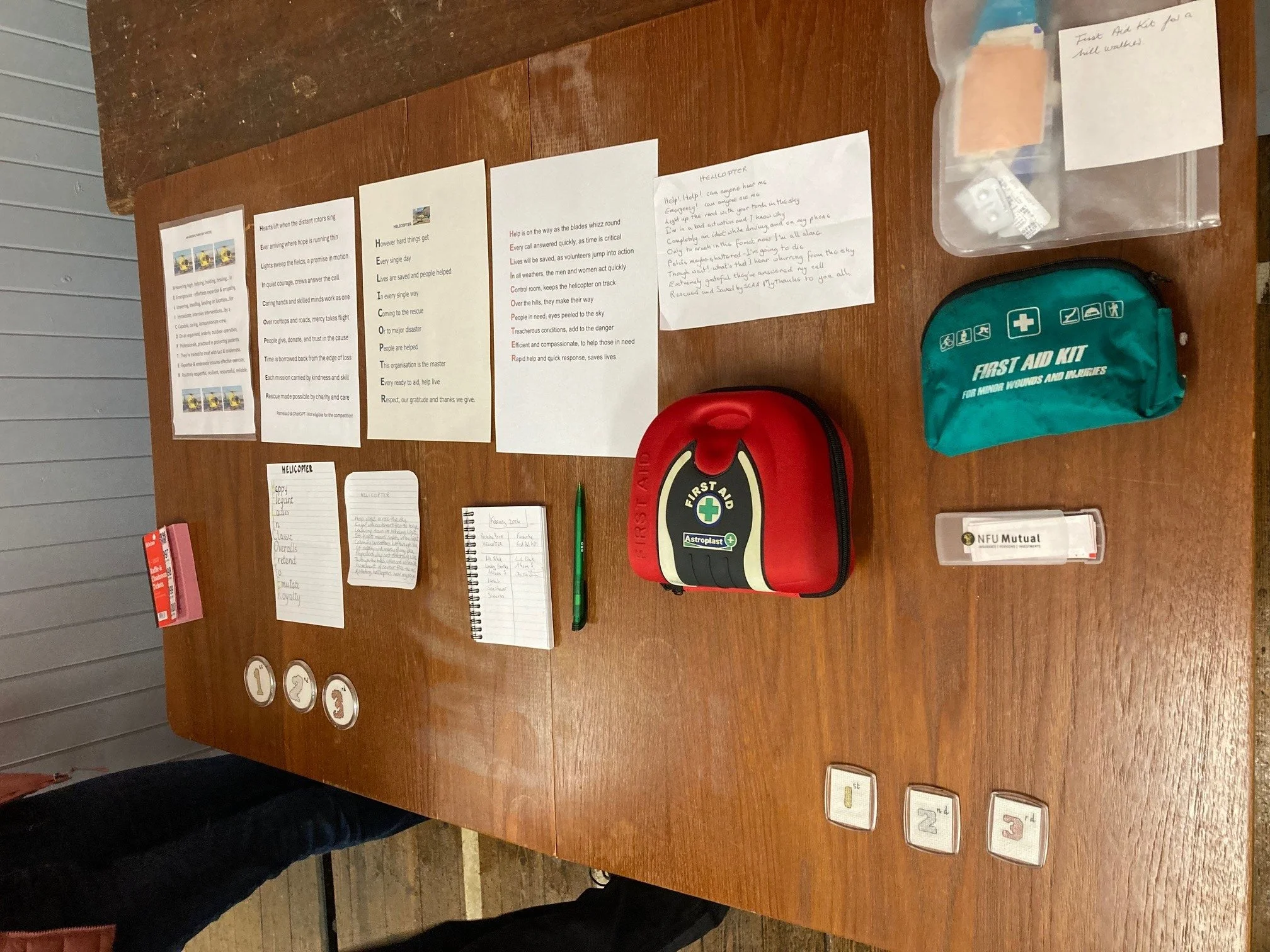
ACROSTIC Poem - HELICOPTER; 1) Jen Shearer 2) Alison Smellie 3) Liz Black
Favourite First Aid Kit : 1 Equal) Liz Black & Alison Smellie 2) Anne Artis 3) Christine Bauer
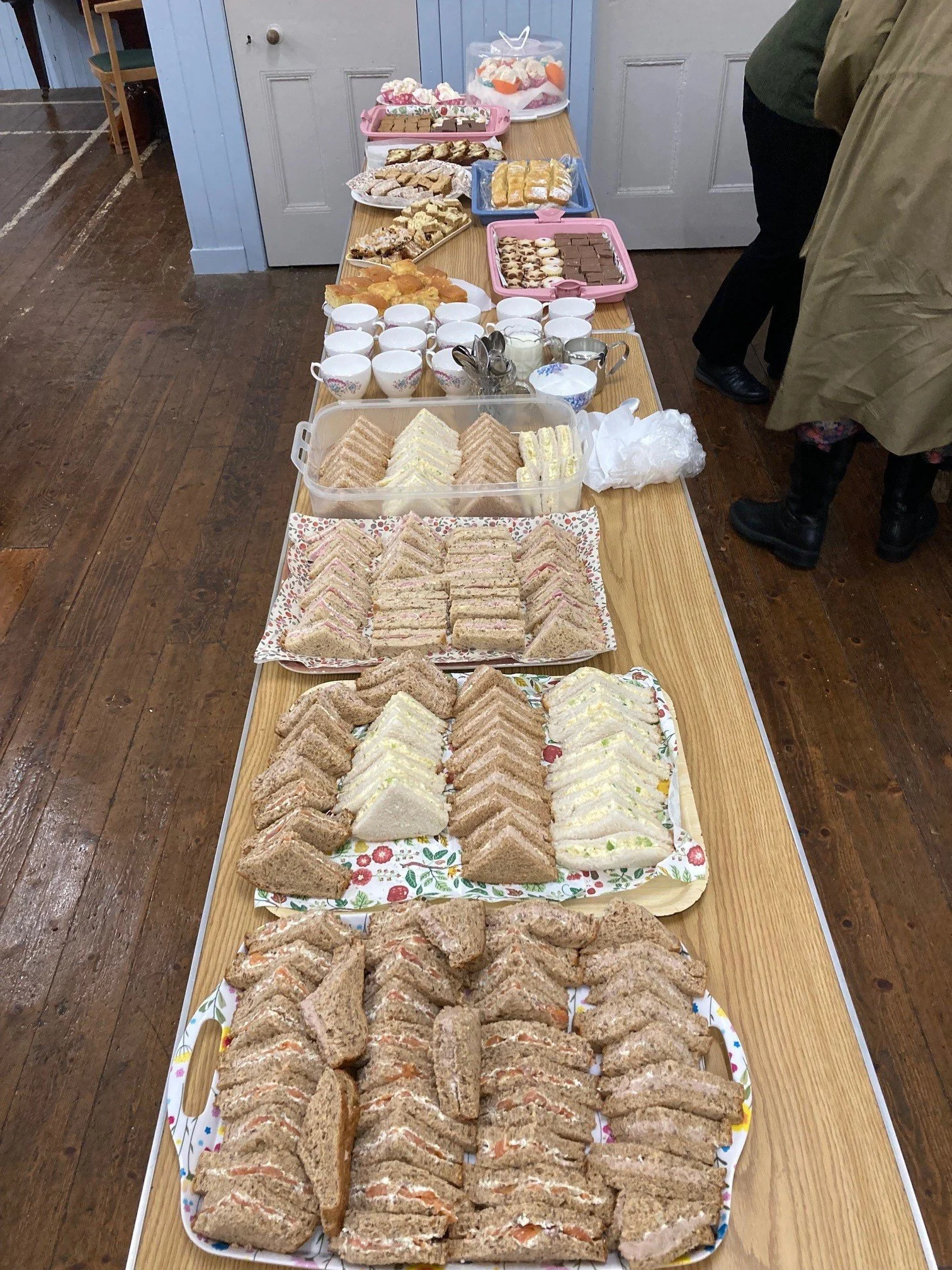
As the meeting closed, Anne thanked our hostesses for a wonderful supper and our speaker for a wonderful presentation, before members and friends headed out into the damp evening carrying their raffle prizes.