Monthly Meeting – “Resist the urge to control nature, allow it to find its own way”
Tuesday 10 March
On a damp but mild evening, Anne Artis gave a warm welcome to Thornhill Hall before quickly running through the ‘business’ for the evening starting with apologies and dates for the diary including the forthcoming Area Lunch (Fife, SC&WP & Perth & Kinross) to be held in Coupar Angus on 14 June and later in the year the National Gathering which we are selling raffle tickets for, the Evelyn Baxter Calligraphy Class in October and our outing to see My Fair Lady at Pitlochry Theatre in December as part of our Ruskie 100th birthday celebrations! Anne also shared the sad news of a memorial quilt being prepared to support a cancer charity on behalf of the Federation Committee, along with the sale of bags of buttons to raise funds for that charity.
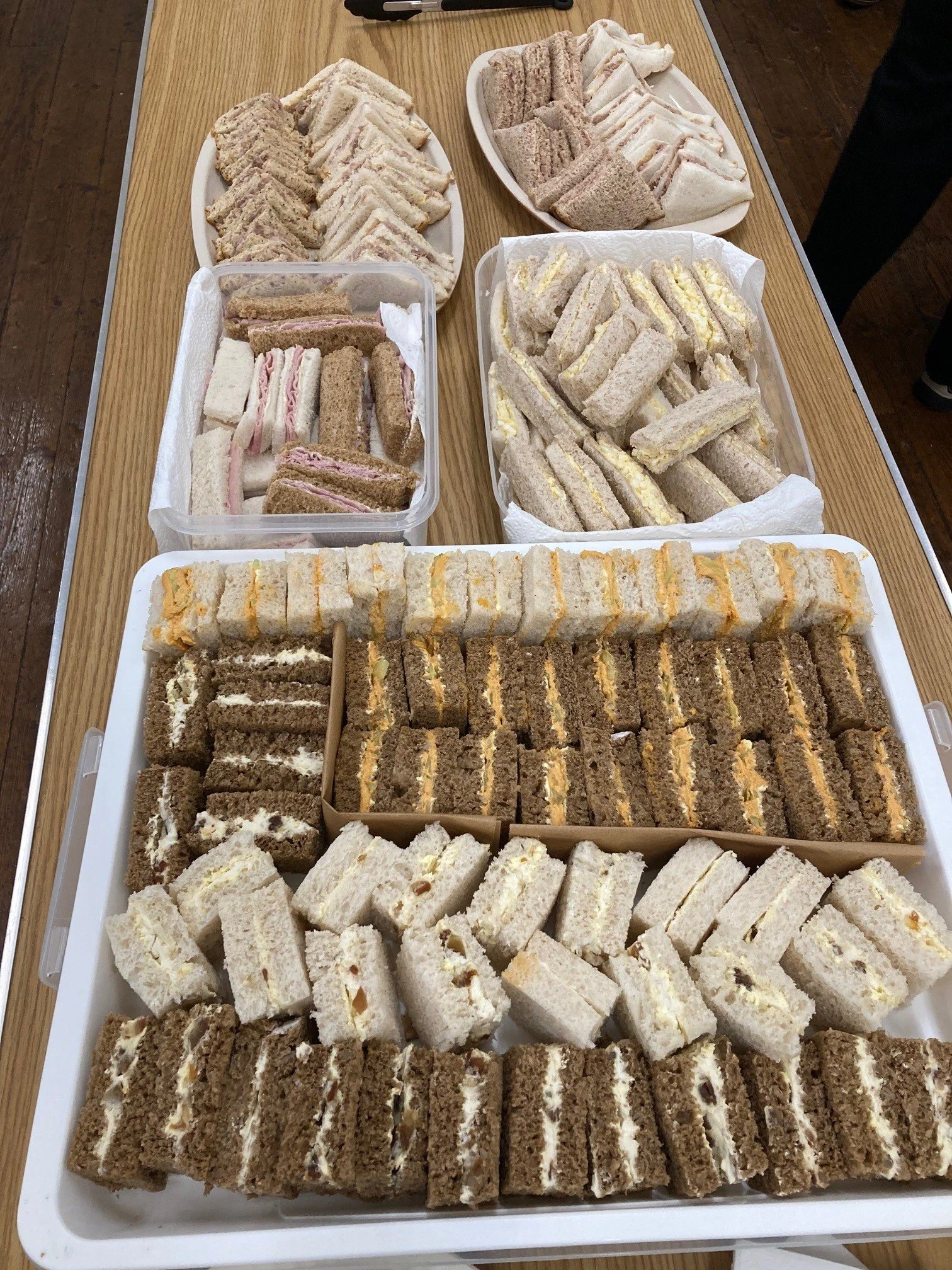
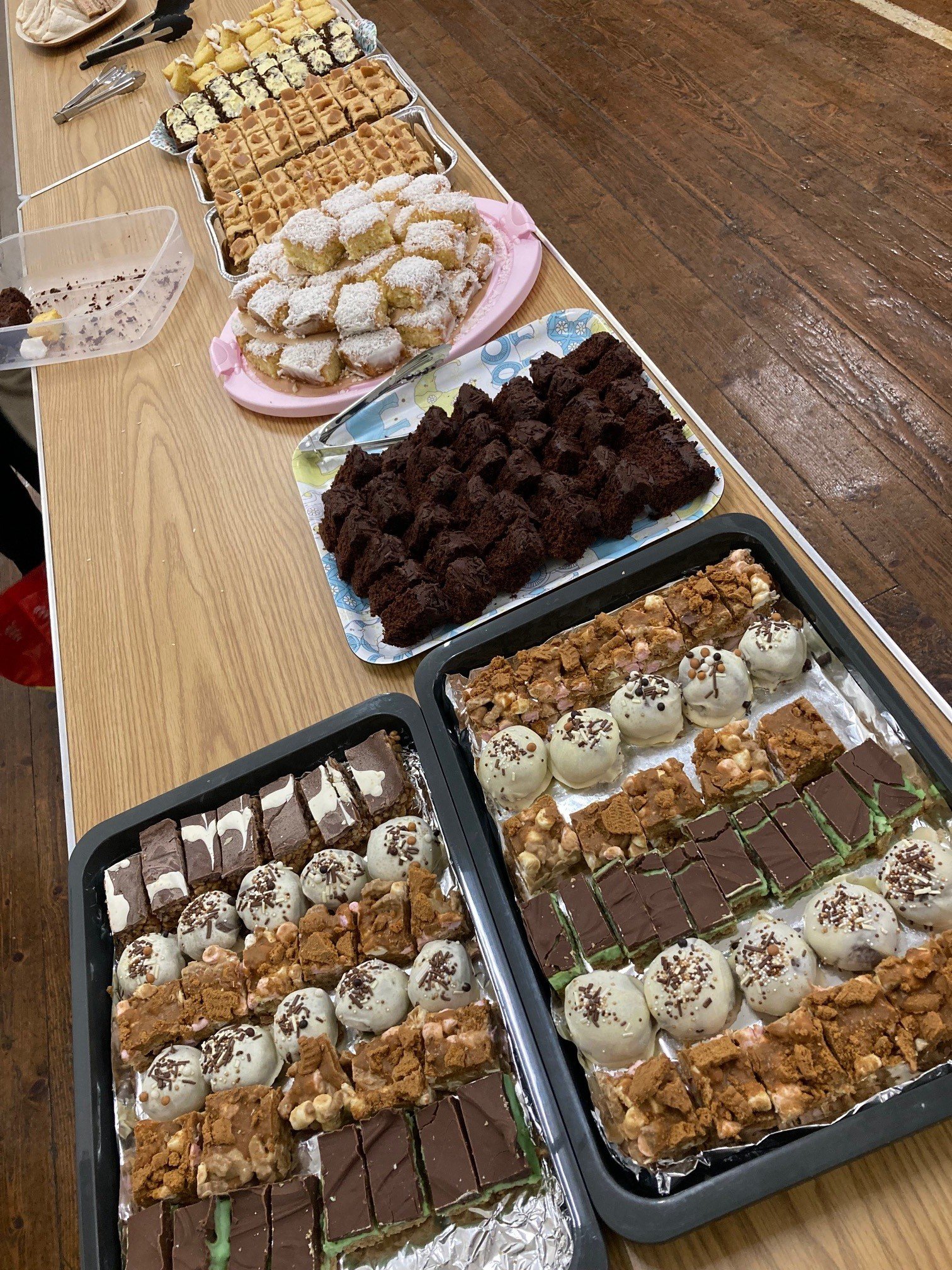
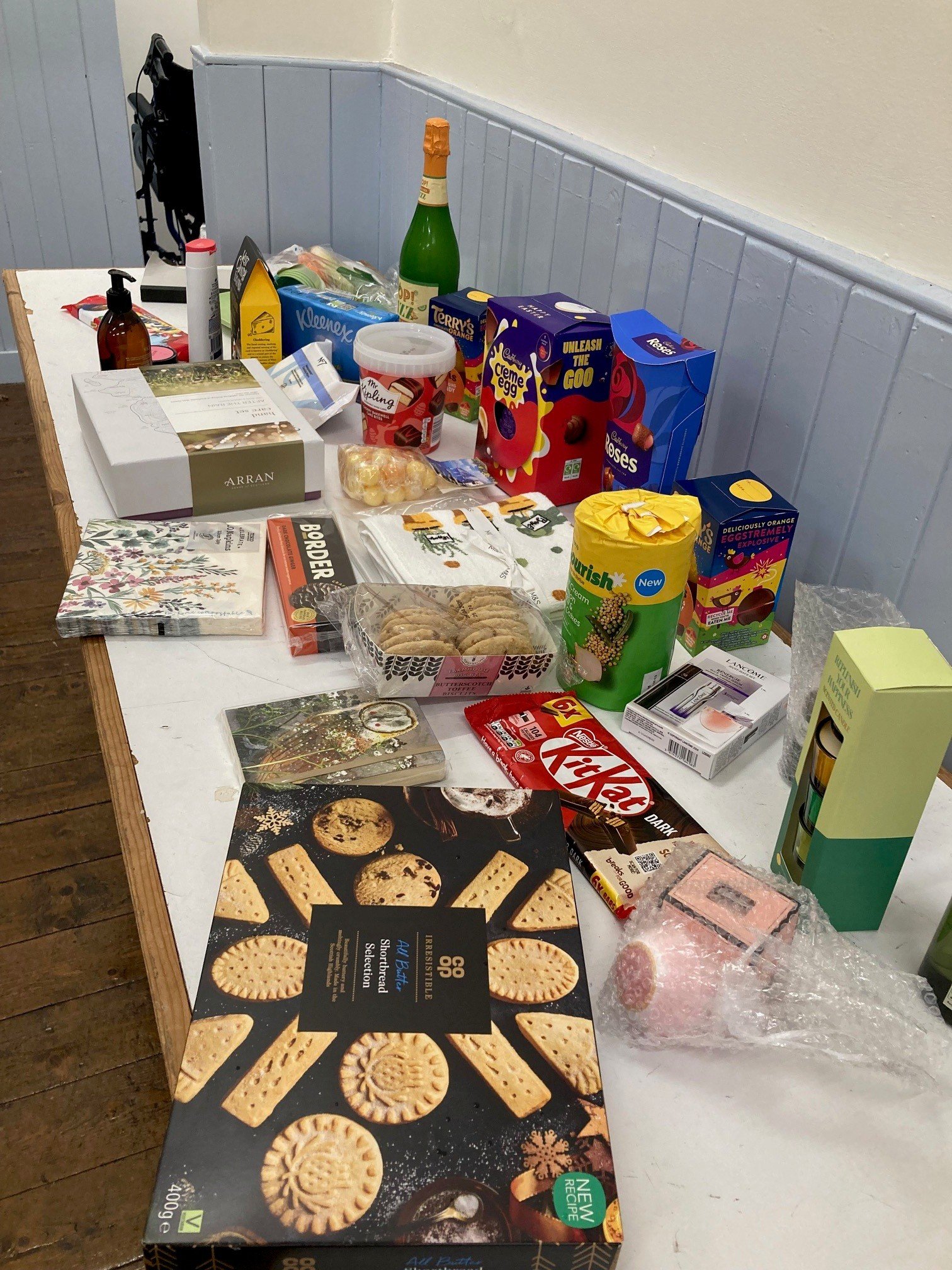
In a change to our usual running order we turned our evening upside down and enjoyed a smashing Ruskie supper from Alison Smellie, Pat Rawlinson and Carole Russell to allow our speaker time to get set up. Another raffle filled with generous donations also raised funds for Ruskie.
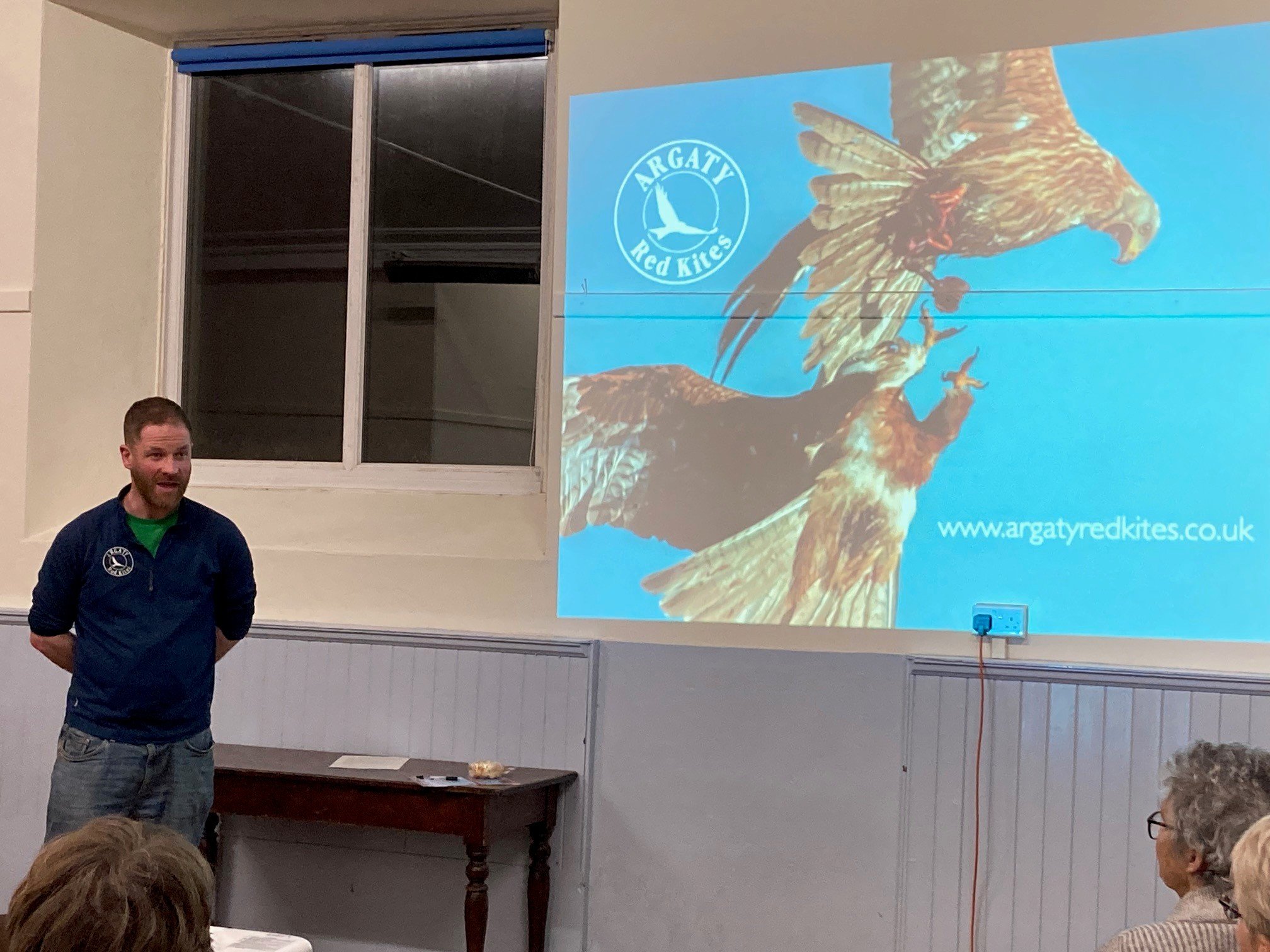
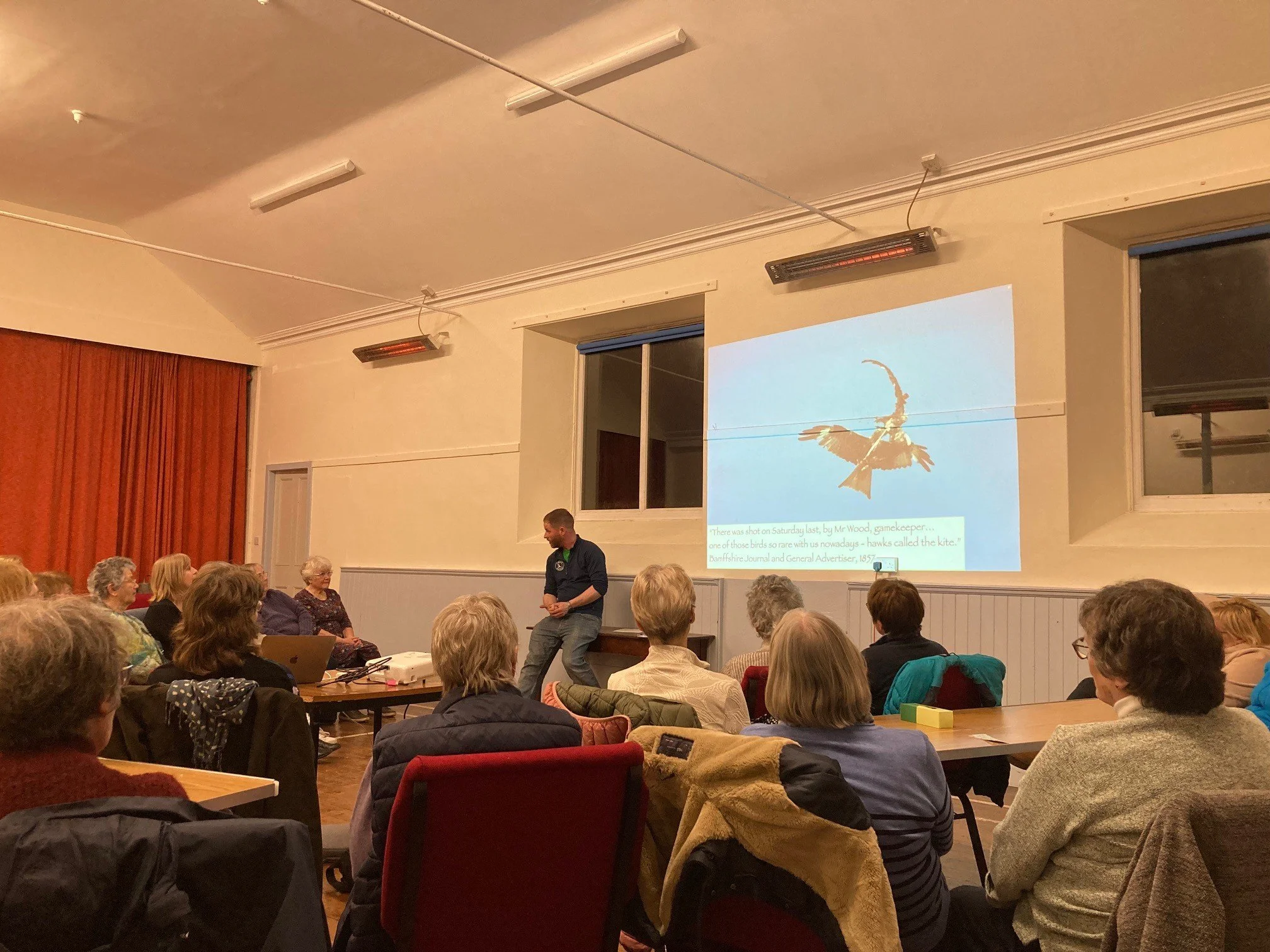
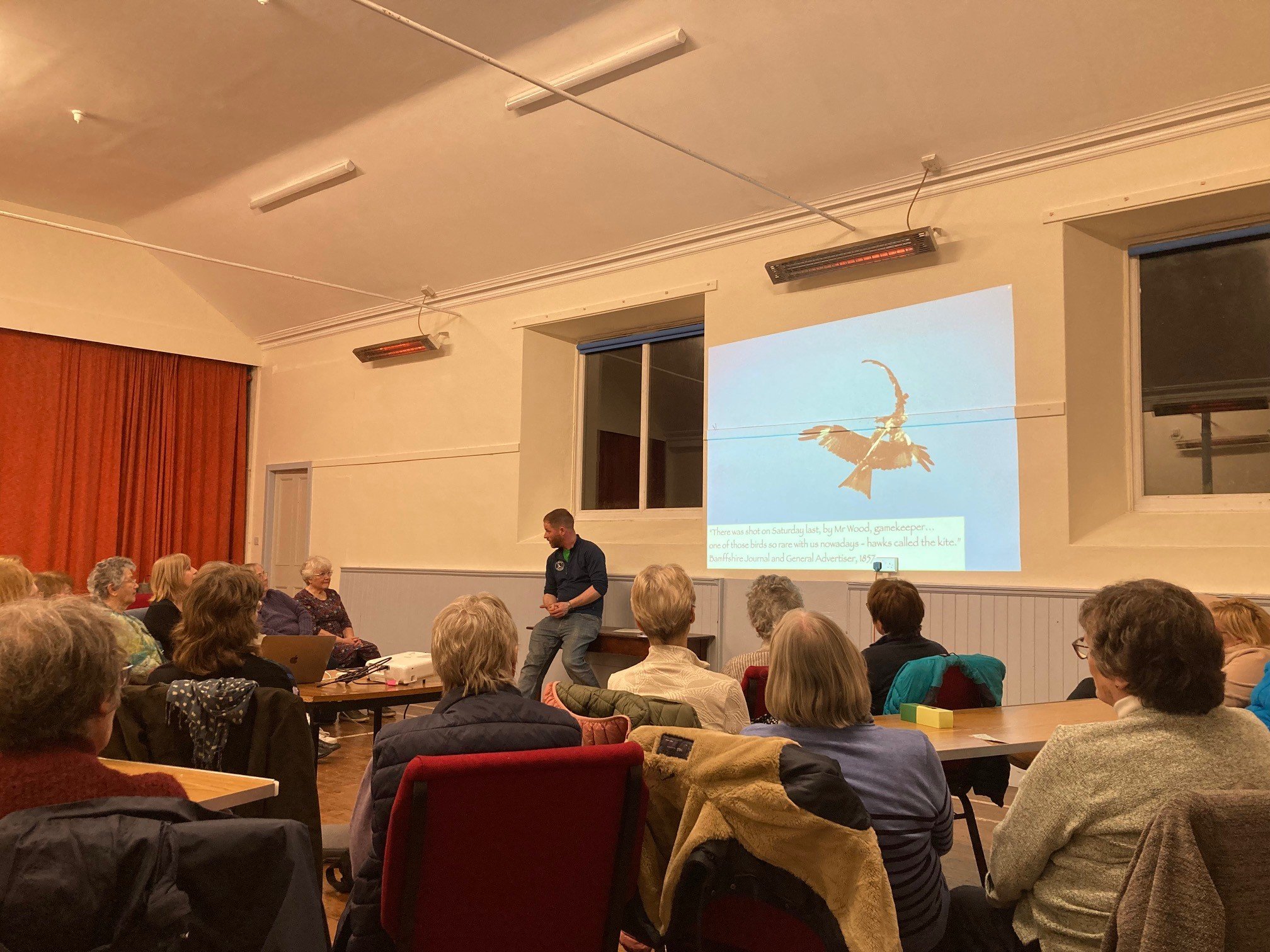
Tom Bowser from Argaty Red Kites received a rousing Ruskie welcome before sharing his perspective on rewilding in Scotland in particular focusing on the red kites and beavers based at Argaty. A number of Ruskie members have already visited the working farm which produces sustainable food alongside a good home for nature. 80% of Scotland is under agricultural production but also one of the most nature depleted countries in the world and unless we restore nature on farms then we will struggle and the farm is a great opportunity for nature restoration from basic conservation work of planting trees and digging out ponds but also the rewilding work. Often this has negative connotations but with a future focus, engaging the community, then we step back and allow nature the space to breathe. For Argaty this started with red kites which used to be the most common bird of prey across the country and they were protected by Royal Decree in England for it’s societal value; in Scotland they were not protected but revered and often settlements were named after the kites using the old form of ‘Gled’ which would not happen if they were perceived as a nuisance or pest! Over time the development of the railway network, and game shooting estates where animals which posed a threat to game birds were hunted down as part of everyday life without much record keeping but some totals do exist which show the extent of shooting and poisoning of wildlife including red kites. Historically we have had a significant amount of wildlife on our doorstep but much of it has been lost. Some pockets of rare kites were found in Scotland or remote areas in Wales which could all be traced back genetically to one female so gamekeepers were educated, landowners paid to keep nest sites safe and the army patrolled the habitat until numbers started to climb but the population was still at risk genetically until some chicks were brought in from overseas by Roy Dennis and reared and released. The RSPB continued this programme and Argaty was home to the first wild born chicks who were ringed and monitored. Along with the red kites came a wave of bird watchers and it became important to keep the birds safe even when they are inclined to follow human populations and scavenge from them! The Bowser family began to feed the birds a modest amount, introduce viewing hides and inform the public about the birds.
The family are now also involved in red squirrel population conservation, wildlife rehabilitation and looking at the non productive farming areas (rather than farm every inch of land!) to encourage pollinators, nesting boxes, encouraging ospreys etc – all of which started with the red kites! The population in Scotland is now one fifth of the world population of red kites and we are in the fortunate position of being able to export back to other countries to help them, in particular to Spain to return the favour they paid us.
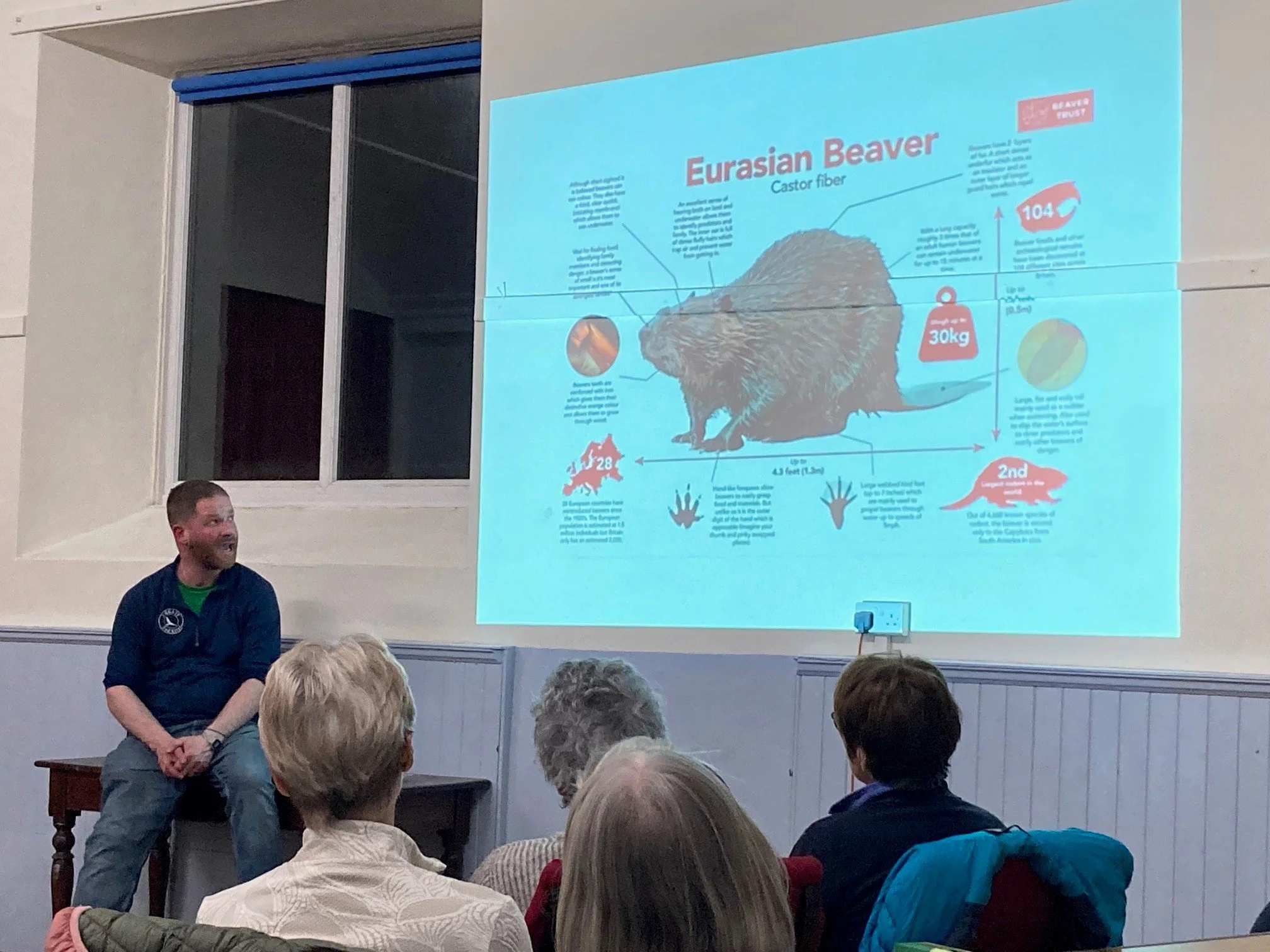
Argaty are also involved in reintroducing beavers. “Beaver Believers” realise how vital these animals are to the health of our planet – insects thrive on the deadwood, fish and bats feed on the insects who are in the wetlands which are created. It is inspiring to see so much wildlife in one place at one time, but also frustrating to realise how unusual this is because of the ‘shifting baseline’ over time where we cannot go back and recognise what we are missing. Tom realised that beavers were an incredible loss and environmentally we need to get them back quickly. Beavers were present in Scotland 10,000 years ago and remains have been found to confirm the dates of this; we surmise that they were killed off for their meat, use in perfumes and medicines and their rich fur pelt, and there are many theories as to when they went away but when they were mistakenly released back into the community on valuable arable land there was no protection for the animals however eventually their value was recognised and they were protected but control licenses were still granted (by a simple phone call) if there was a perceived threat to arable land. In 2020, Tom and James Nairn collaborated on rehoming beavers who would otherwise be culled and it was a once in a lifetime chance to do something significant. This required significant paperwork and consultation with local stakeholders on moving animals which proved to be controversial – although there were hundreds of supporters, there were also conflicts with long term friends and neighbours and the unions. During covid times this was all done online and Argaty who had previously successfully navigated the path between food production and nature suddenly became the ‘enemy’ for reintroducing beavers, and embroiled in a lot of local politics which delayed the granting of a license. Eventually the political landscape changed and the license was granted and the first beavers were legally released at Argaty shortly after Storm Arwen flattened millions of trees even without the help of beavers! At Argaty the beavers have diversified the wetlands, insects are breeding, amphibians are thriving, herons have moved in. The effects of climate change are evident and during summer heatwaves the beavers pond levels were dropping below the 3feet they preferred but, on observation, the family realised that they were dredging the ponds and creating mud islands in the landscape and retaining the water in ponds in the summer; in winters pond overflows flooded farm tracks needing expensive repairs until the beavers created dams upstream and gave natural protection holding back 1m litres of water! The beavers are mitigating against flood damage and ensure that water does not flow straight over the landscape by the use of dams, or dredging choked ponds and encouraging healthy plantlife. Beavers have significant impact on the environment and the animals matter hugely in managing cool, clean water.
In summer 2022 the first wild beaver kits were born at Argaty starting to undo the sad history of the species but this is just the beginning of the story and humans need to stand back and let the beavers do what they do. There have been multiple relocations, even to new catchment areas, without any problems so far and the potential for good is dramatic. Tom shared that the work is funded by donations from the public. He believes that conservation should be done for future generations so our children grow up with kites and beavers and regeneration and do not accept a “shifting baseline”, other than in a positive sense rather than the negative way that we have grown up with losing wildlife over time.
After a brief discussion about reintroducing predators and the implications (and controversy) for the farming community, the possibility of domesticating beavers (not really!) and the trick of wrapping chicken wire round trees to protect vulnerable species, Anne thanked Tom for sharing his experiences and insights with us before he judged the competitions.
Competitions:
3 different collected feathers 1) Pamela Deans 2) Anne Artis 3) Sharon McRobert
Home-made fat ball for birds 1) Mary Muirhead 2) Sharon McRobert