Monthly Meeting - "Stretch your limits – inside and out!”
Tuesday 14 April
Anne Artis rang the bell and after brief apologies for our busy members who were unable to attend tonight she reviewed the forthcoming diary dates including the Area lunch on Sunday 16 June in Coupar Angus, the National Gathering in Dundee in September (and raffle tickets) and the spring Federation meeting on 18 April in the Honeyman Hall, Bridge of Allan with Karl Macrae (and competitions of a Dundee cake or jar of marmalade); the RHET Choir on Sunday 26 April at Briarlands and the Evelyn Two Day Calligraphy class on 3/4 November at the Raploch Community Centre.
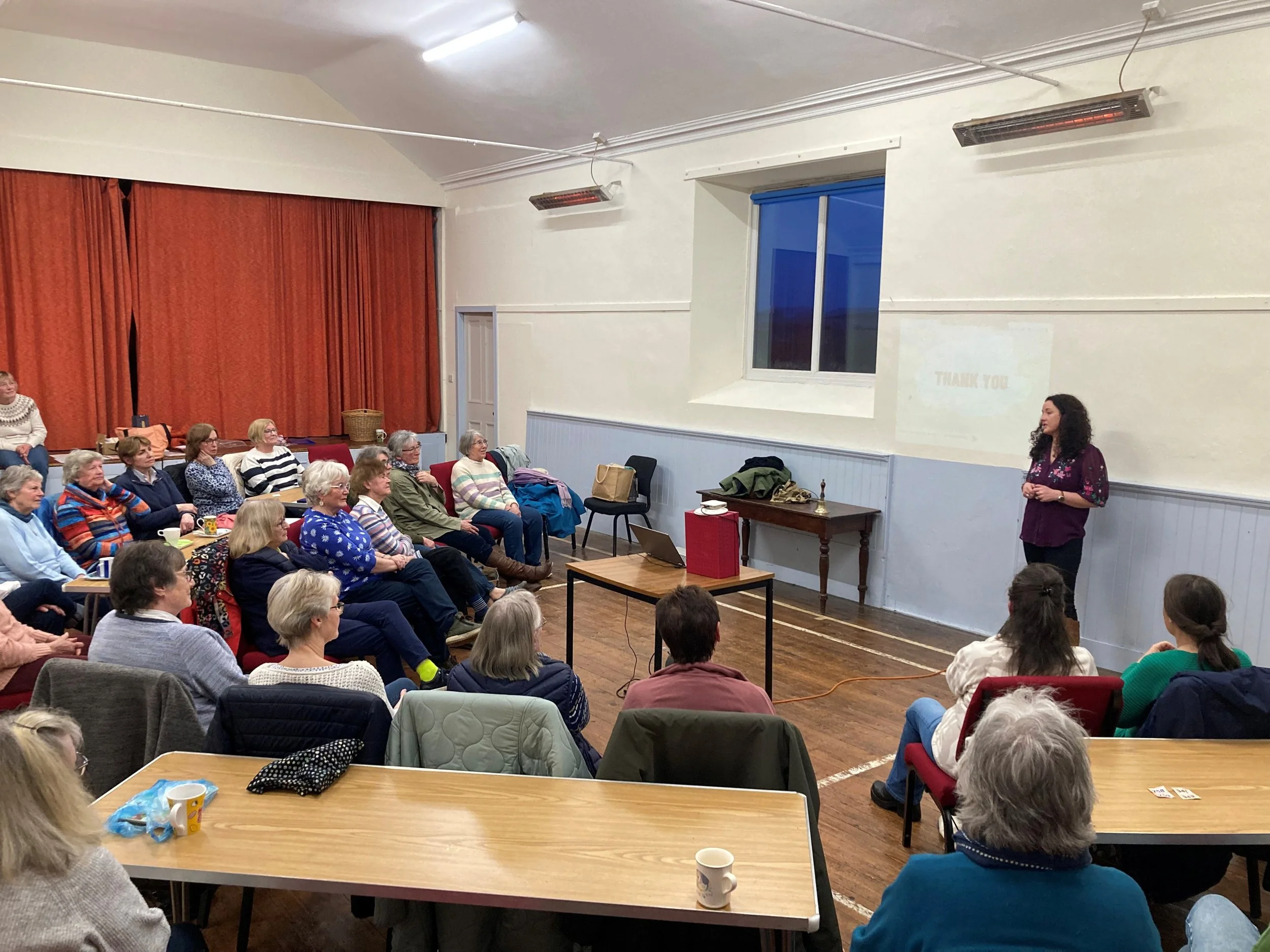
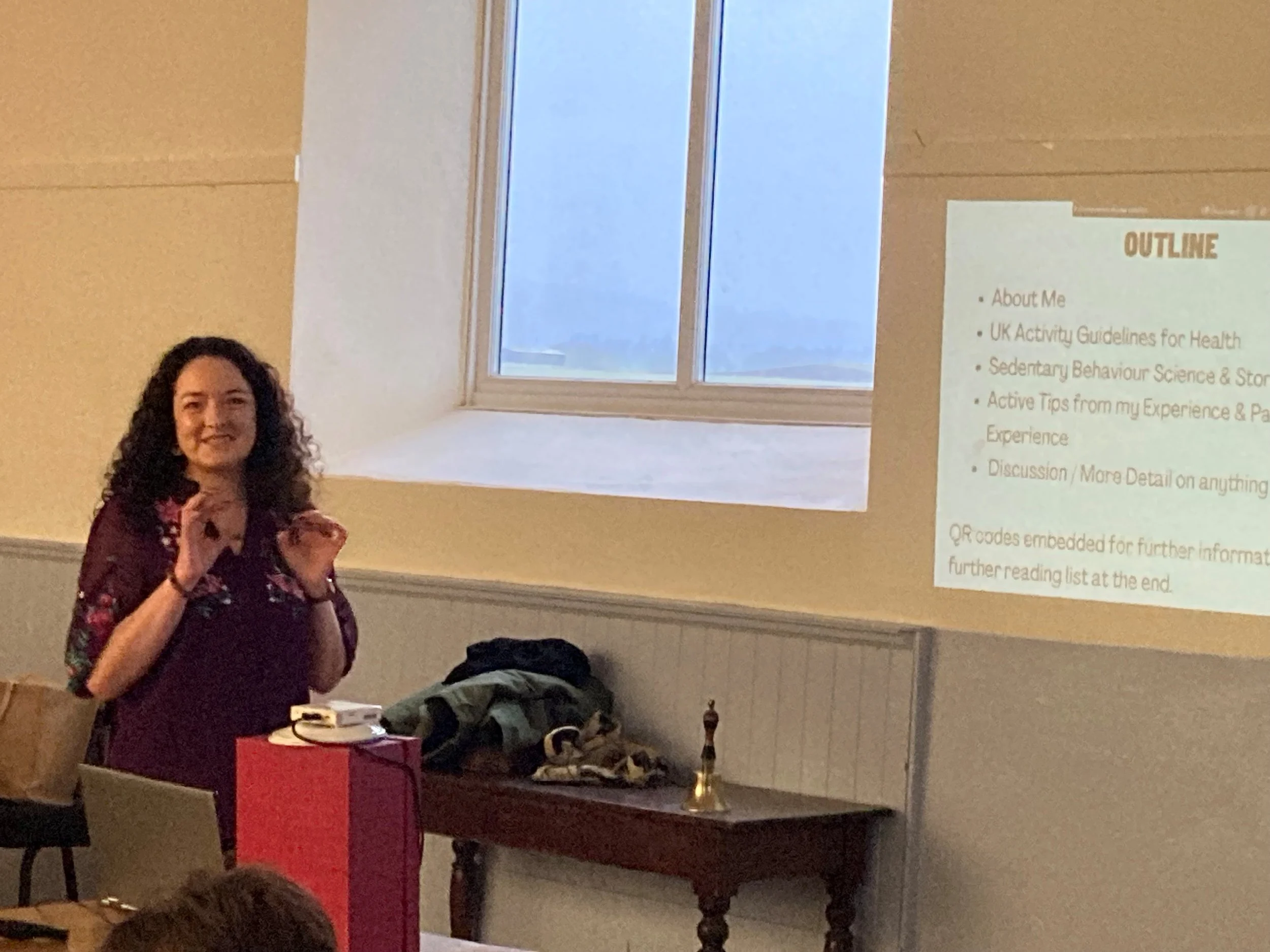
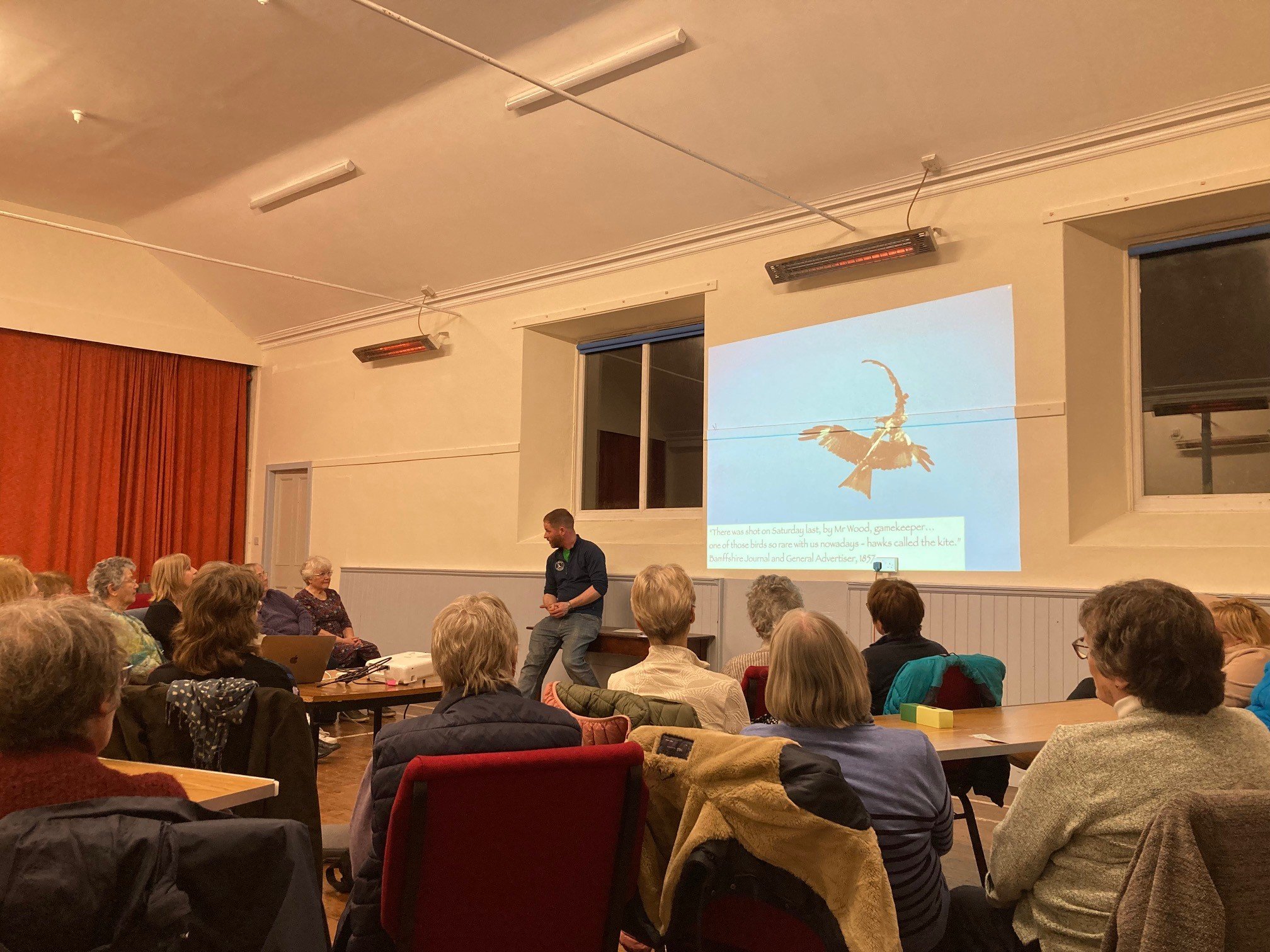
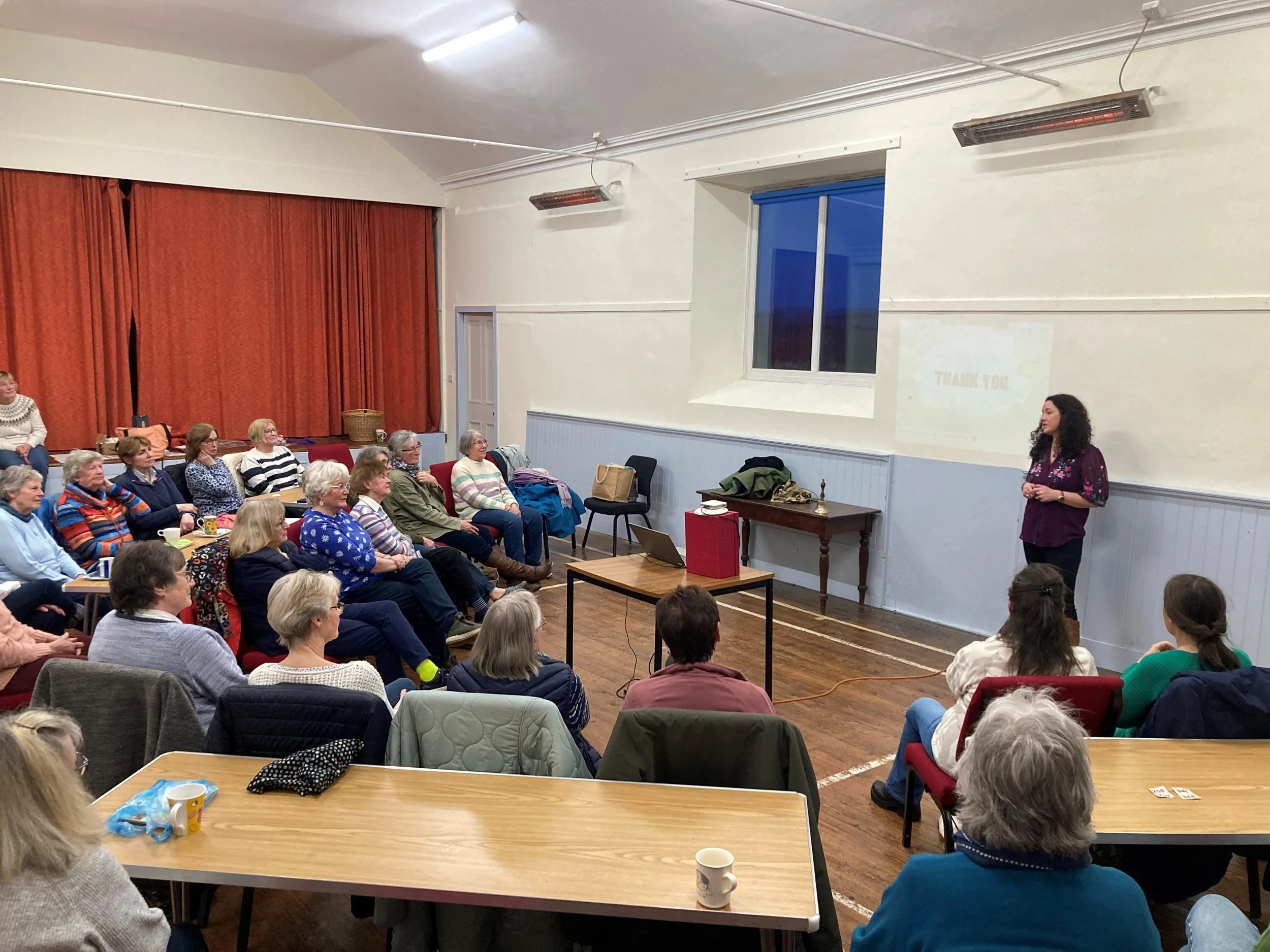
Dr Julie Harvey then led us through small movements for big changes and shared her tips for health and well being based on her clinical and research experience in 24 hour activity behaviour. She covered the UK activity guidelines, her research on sedentary behaviour and tips for being active before hosting a discussion with the members. Julie originally qualified as a physiotherapist in Greater Glasgow and has experience working with individuals based on their individual energy in the community not professional athletes! She now leads a team of 450 physios working from critical care through to long term rehabilitation. Her research is based on analysing activity data, particularly for people who struggle to be active in their daily lives. The science of considering, for example, glucose levels correlated to ‘sit to stand’ is geeky but interesting for both patients (and staff) to try and simplify an approach which works in a complex environment with different cultures across different settings. In hospitals, Julie has focused on tackling physical activity in a captive ward setting where working across silos generated a breakthrough in getting patients more active, from a small pilot initially to multiple ambassadors for the programme as it spreads and scales through communication, training and awareness, including competitions between wards for activity levels! The team works both indoors and outdoors which also positively impacts mental health. The learning from this not only applies to us as individuals but also if we are supporting family members in hospital.
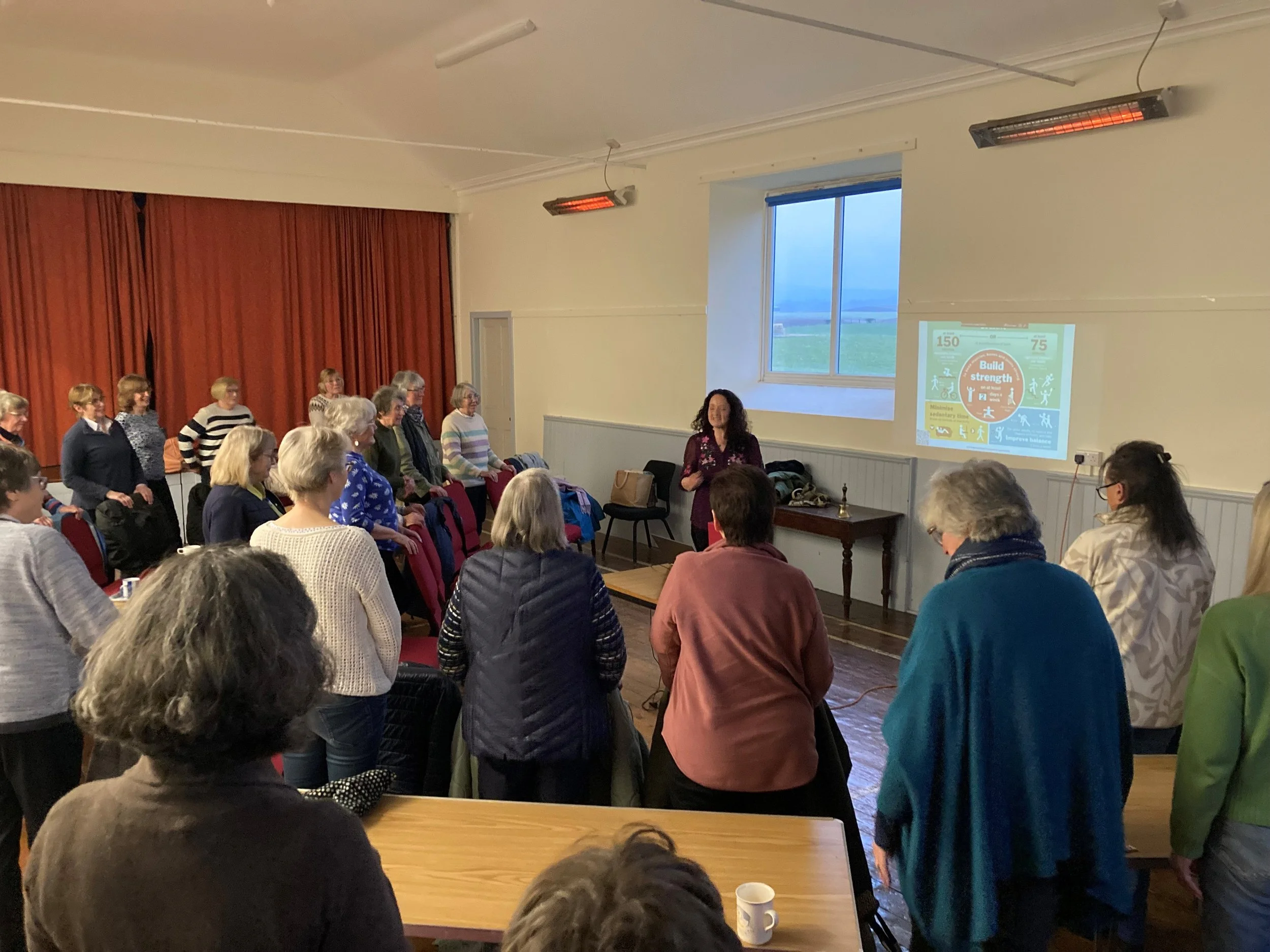
The Chief Medical Officer recommends that we take 150 minutes of moderate intensity physical activity per week but this is not well communicated! The evidence indicated that adults should aim to take moderate activity where, for example, you could be a little out of breath and still talk but not sing! Vigorous activity should be 75 minutes and this means that you would be more stretched and breathing harder! This could be as simple as climbing stairs or running for a bus. Building strength (muscle resistance) and improving balance (offsetting movement) is critical – exercises such as yoga or Tai Chi would address both of these. Julie then challenged the Ruskie members to test their balance in different “planes of movement” standing on tiptoes, heels and one leg – the practice of this over time helps your body steady itself which has long term benefits making us less likely to fall, but also less likely to be injured if we do.
Physical activity has obvious benefits for our quality of life and the guidelines have been expanded to include a wide variety of activity where every minute counts! Julie has a particular interest in ‘sedentary behaviour’ which is different to being ‘inactive’ and means being in a sitting or lying posture but with low energy expenditure (during waking hours) and leads to frailty, poor body health, poor wellbeing and social isolation. Julie has researched the metabolic effects of different activity, where an activity as simple as sit to stand can activate a metabolic response in your body, without actually doing significant physical activity! Most of the population are sedentary for a lot of their day, but it can make a difference to your metabolism if you do a single block of activity (good), or regular frequent actions throughout the day (better). In a clinical setting there is a lot of deconditioning as a result of lack of activity and this accelerates the issues people face and can have implications even beyond a hospital stay and increase the falls risk when at home.
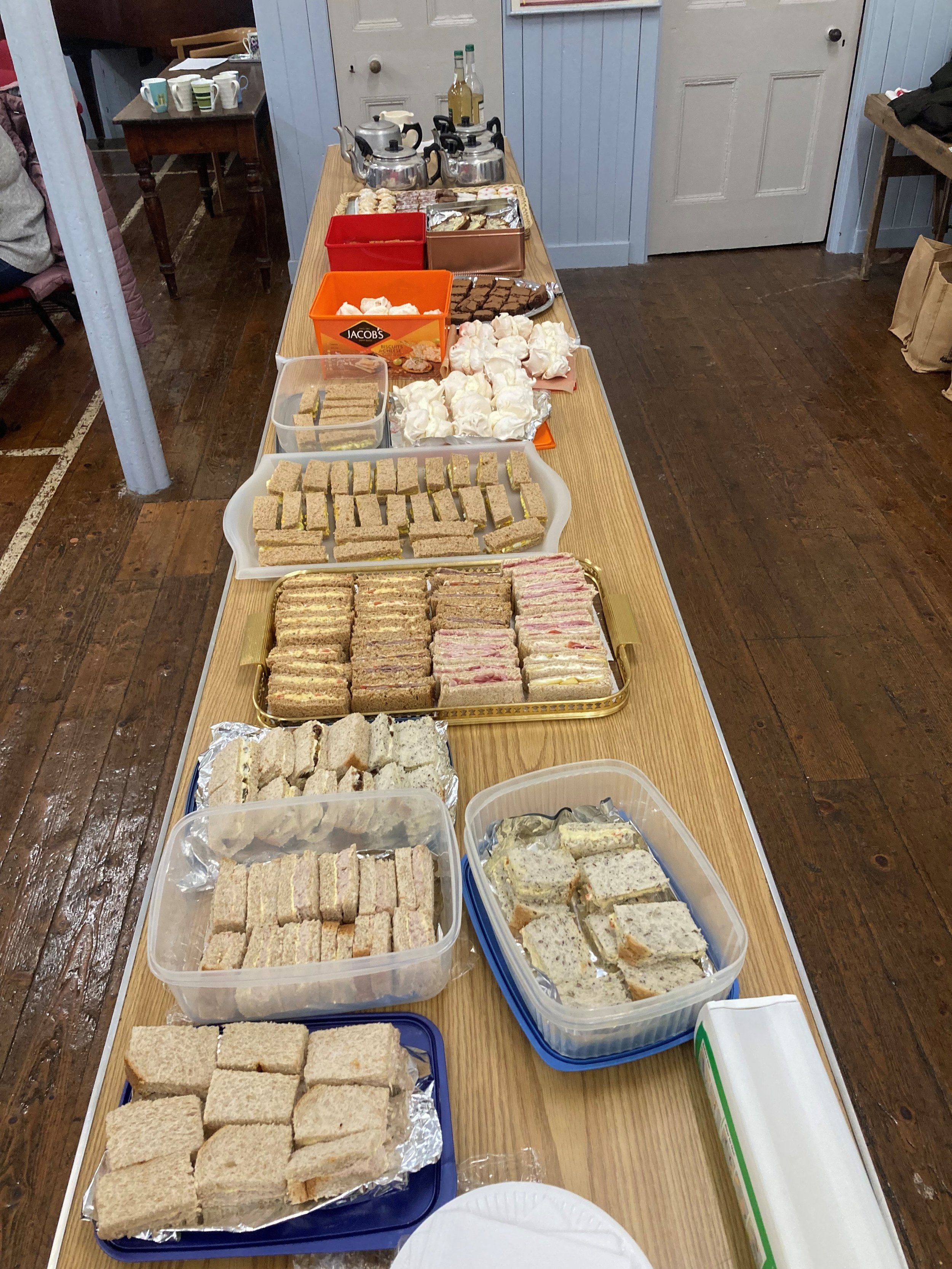
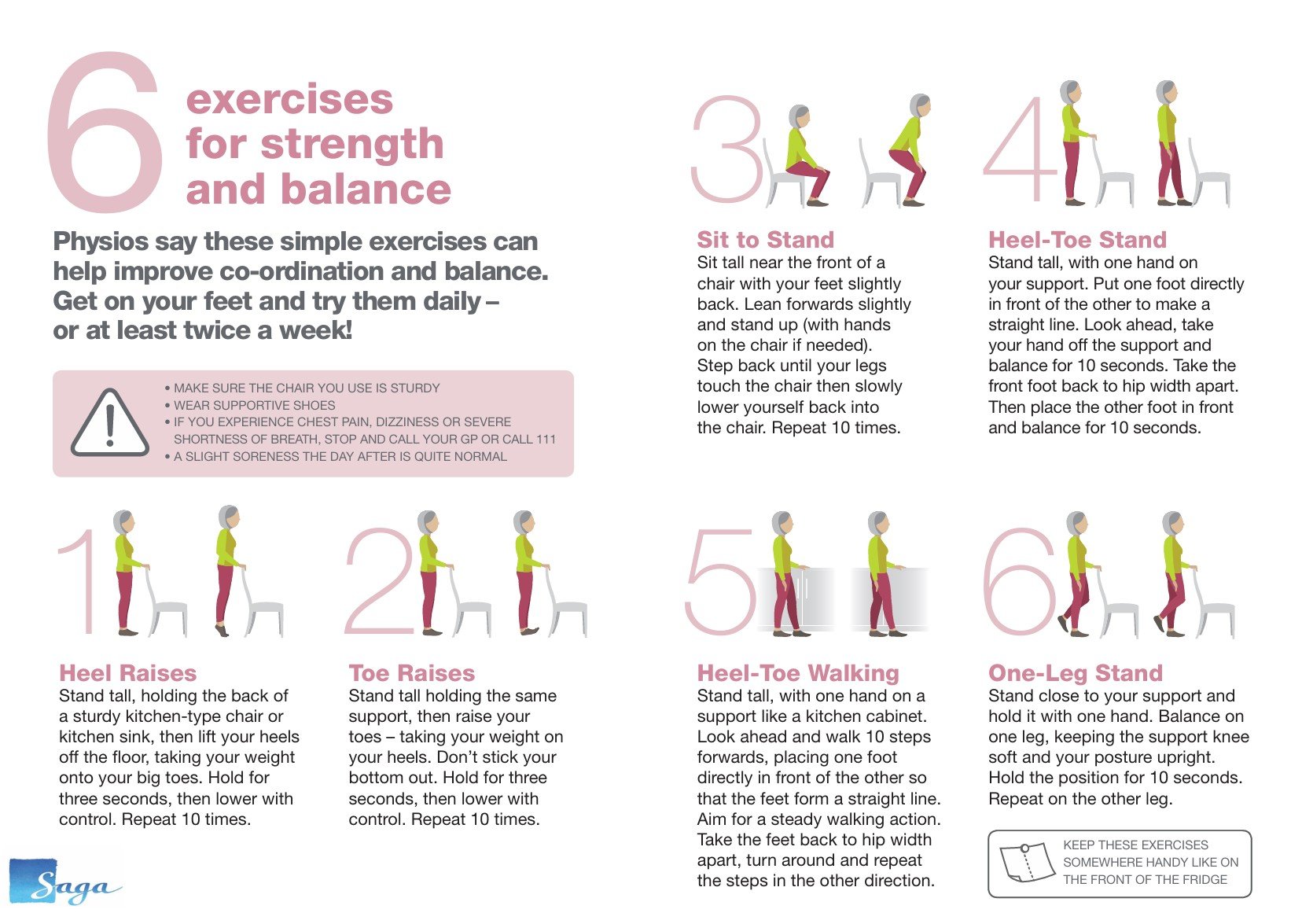
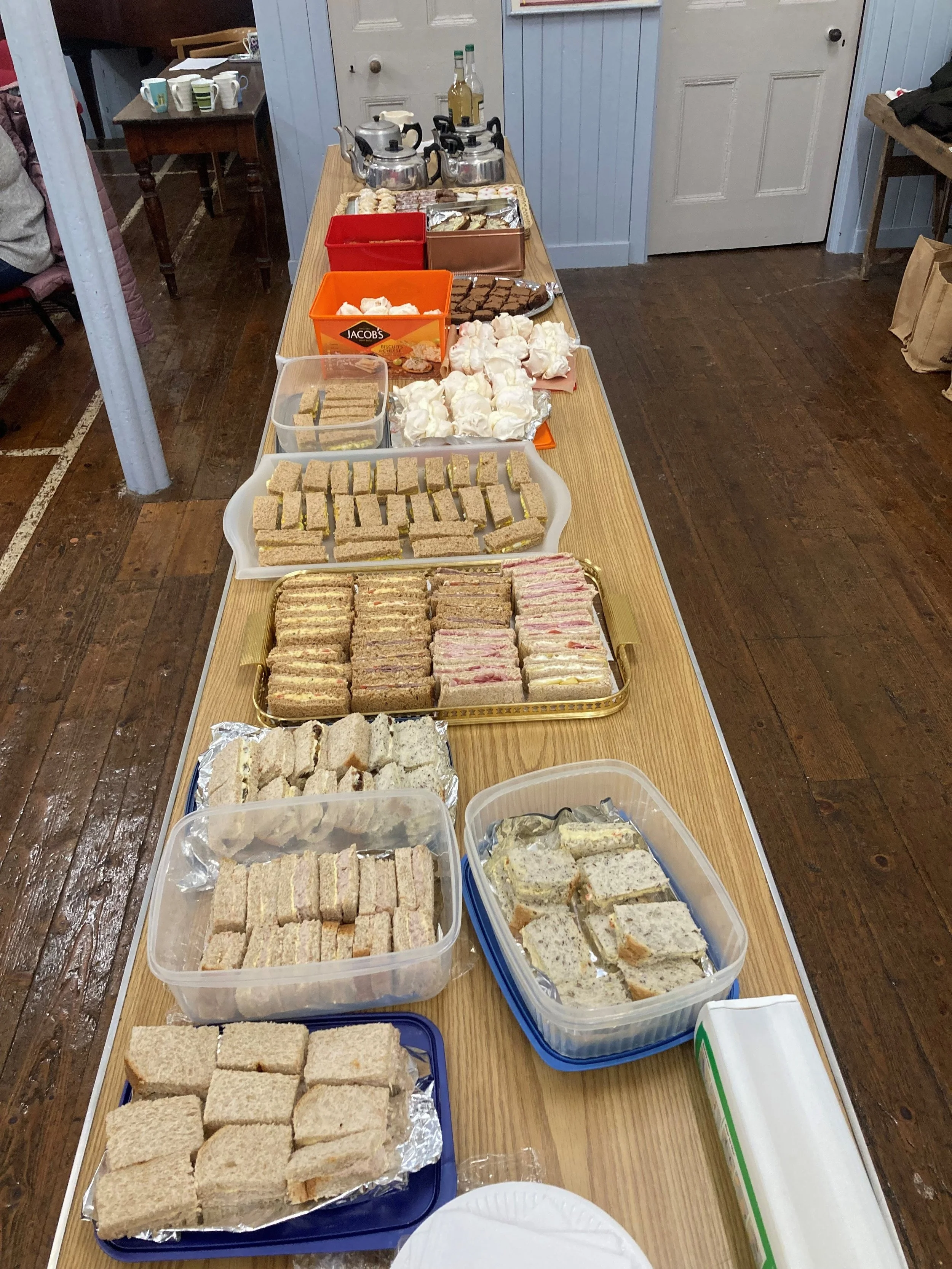
Julie shared her work on “Small Movement for Big Change”, gathering data on video monitors, which includes sitting for fun (at meals out or in church) but breaking the time we sit has a significant effect on our wellbeing (without doing any additional physical activity) which demonstrates improvements in physical and mental health. Julie shared her top tips – to make sure that you enjoy what you do, using what you have and doing what you can, using a timer and that one size does not fit all; setting goals with small actionable steps is important. Improving physical function or cardio metabolic function can start with reducing sitting time throughout the day! Staying active at home has six exercises which are suggested for strength and balance including sit to stand or one leg stand which can be increased in intensity by challenging yourself more (but doing it safely!) for example cleaning teeth while standing on one leg ... then closing your eyes! Julie encouraged us to challenge ourselves but be gentle. Her slides and worksheets are available review and look at the QR Codes. Anne thanked Julie and reminded the Ruskie audience that standing on one leg with a cup of tea in one hand, and a cake in the other is a good way of working on your balance and Ann Brown, Christine Hamilton and Janice Milne provided a smashing supper in true Ruskie tradition so we could practice!
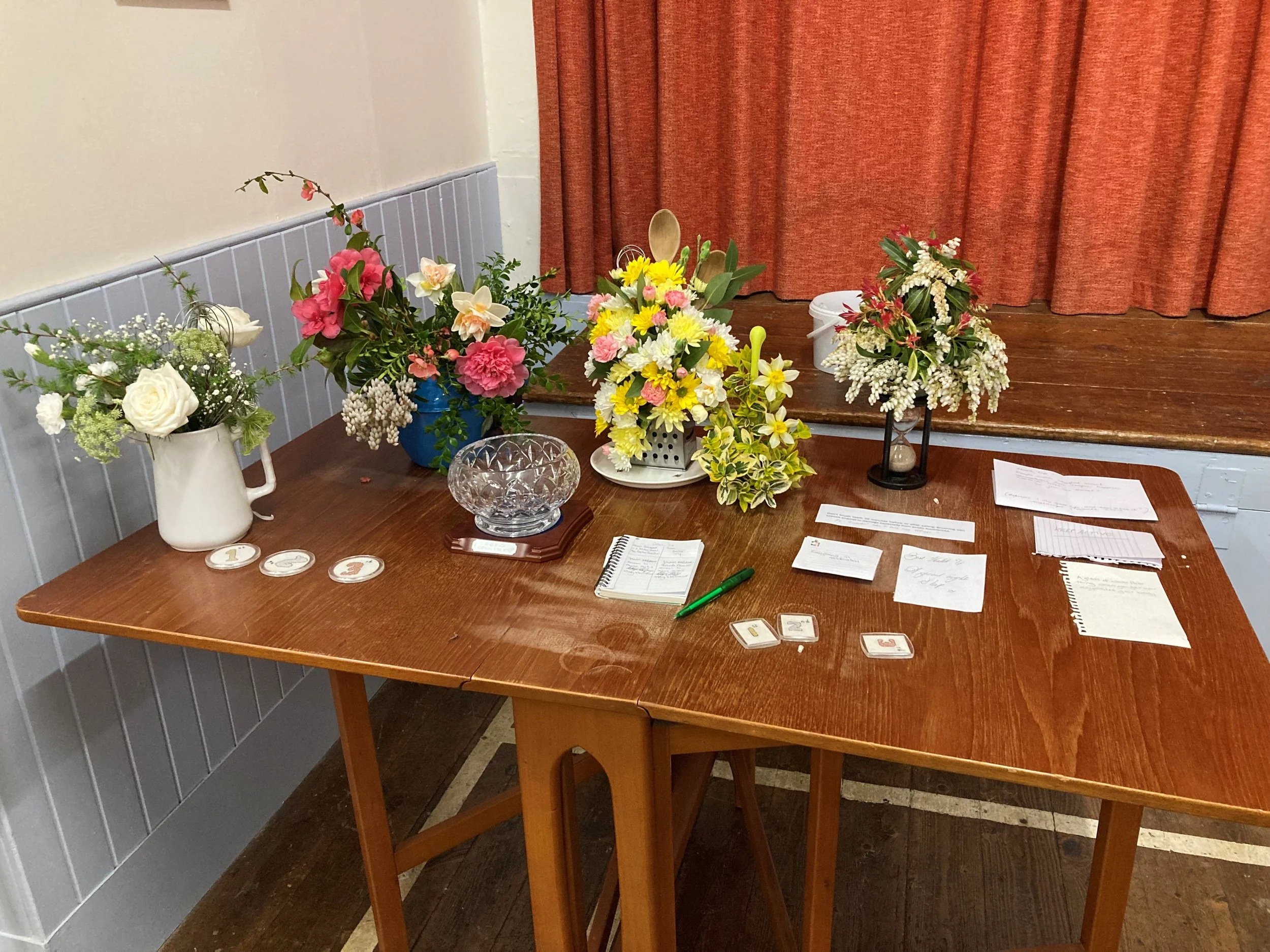
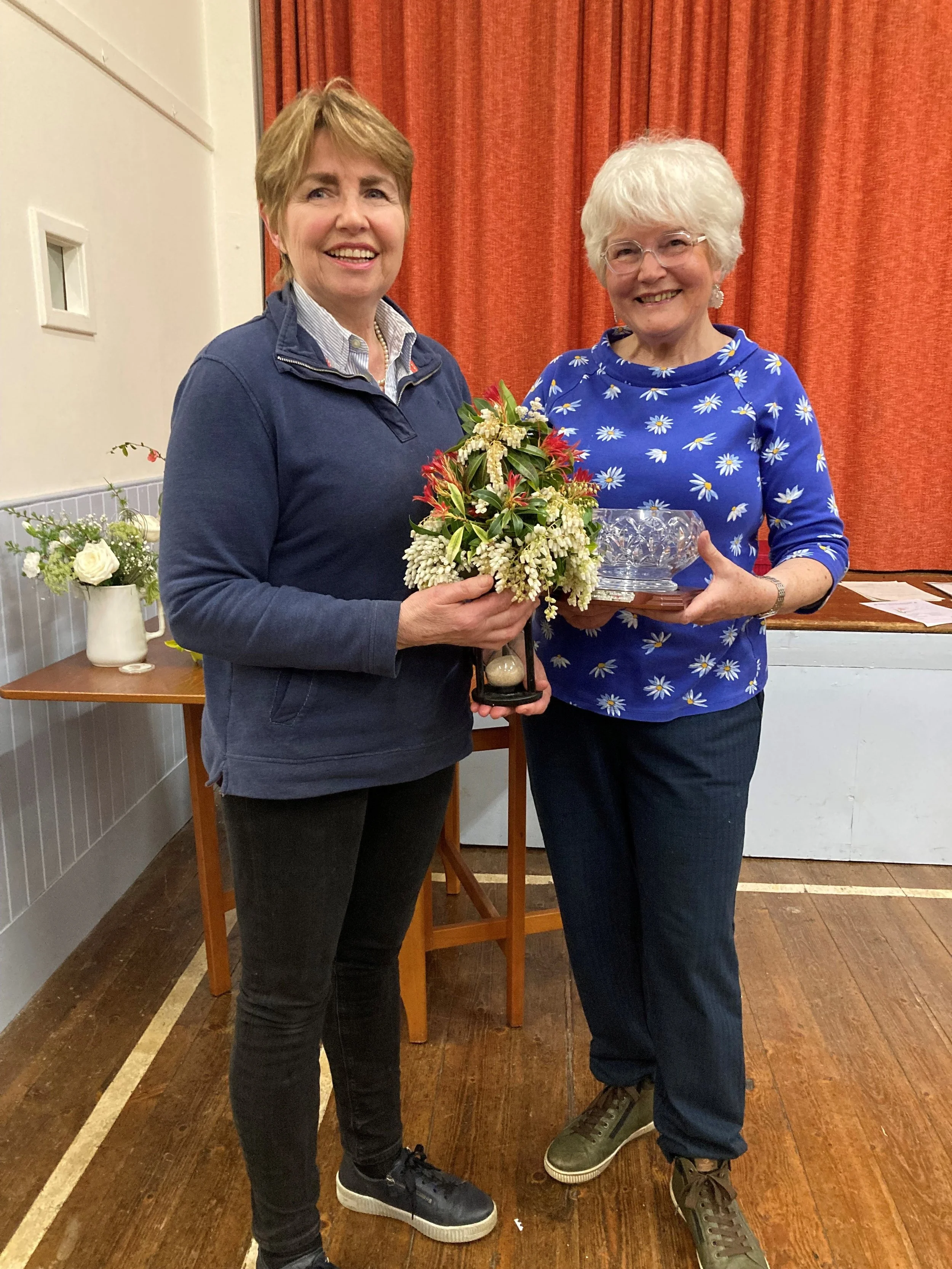
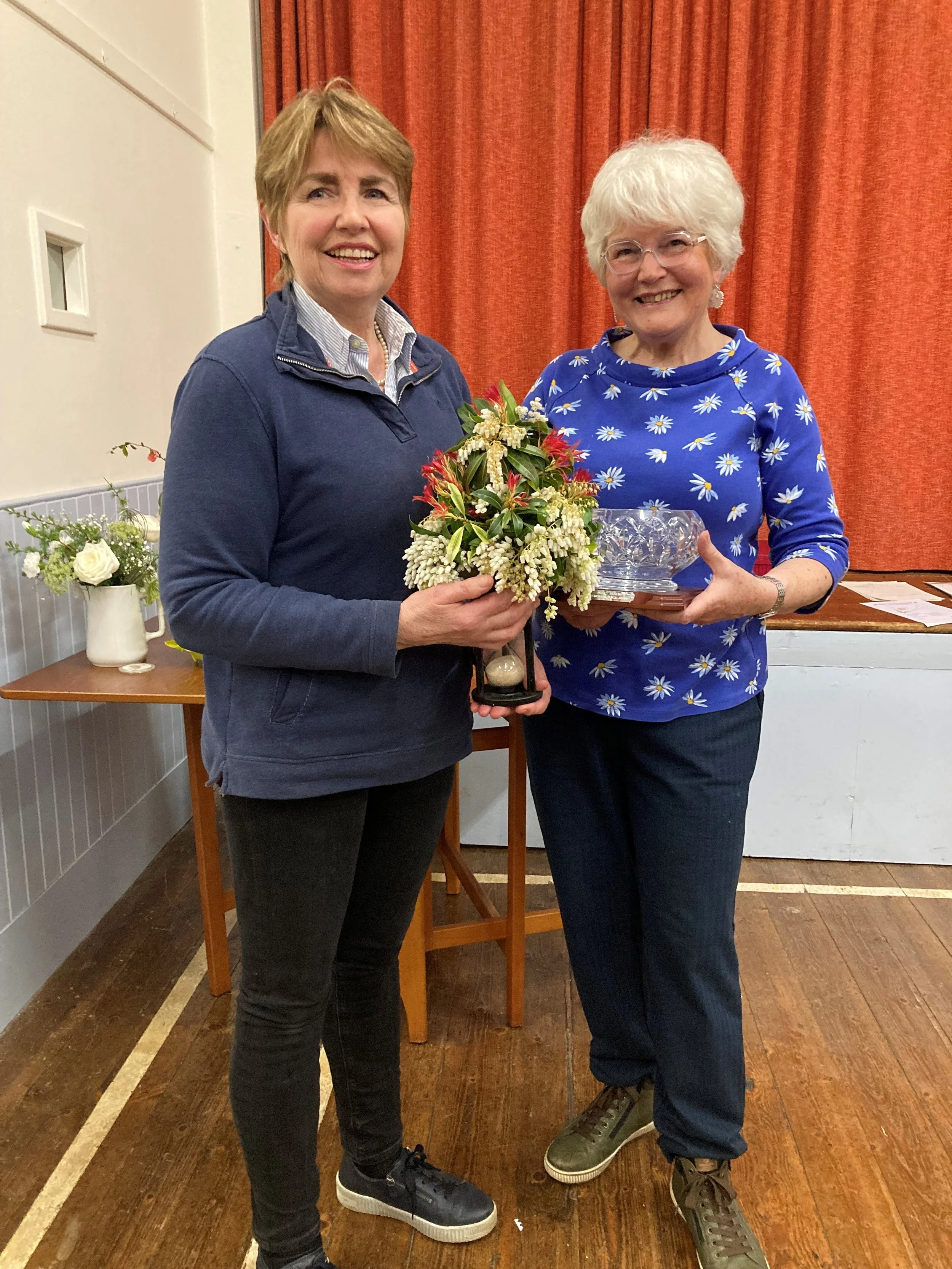
Competitions: Flower arrangement in a kitchen utensil (Mrs Beaton Rose Bowl) - 1) Libby MacGregor 2) Mary Muirhead 3) Allison Mcleod
Best health tip - 1) Anne Artis 2) Mary Muirhead 3) Sharon McRobert
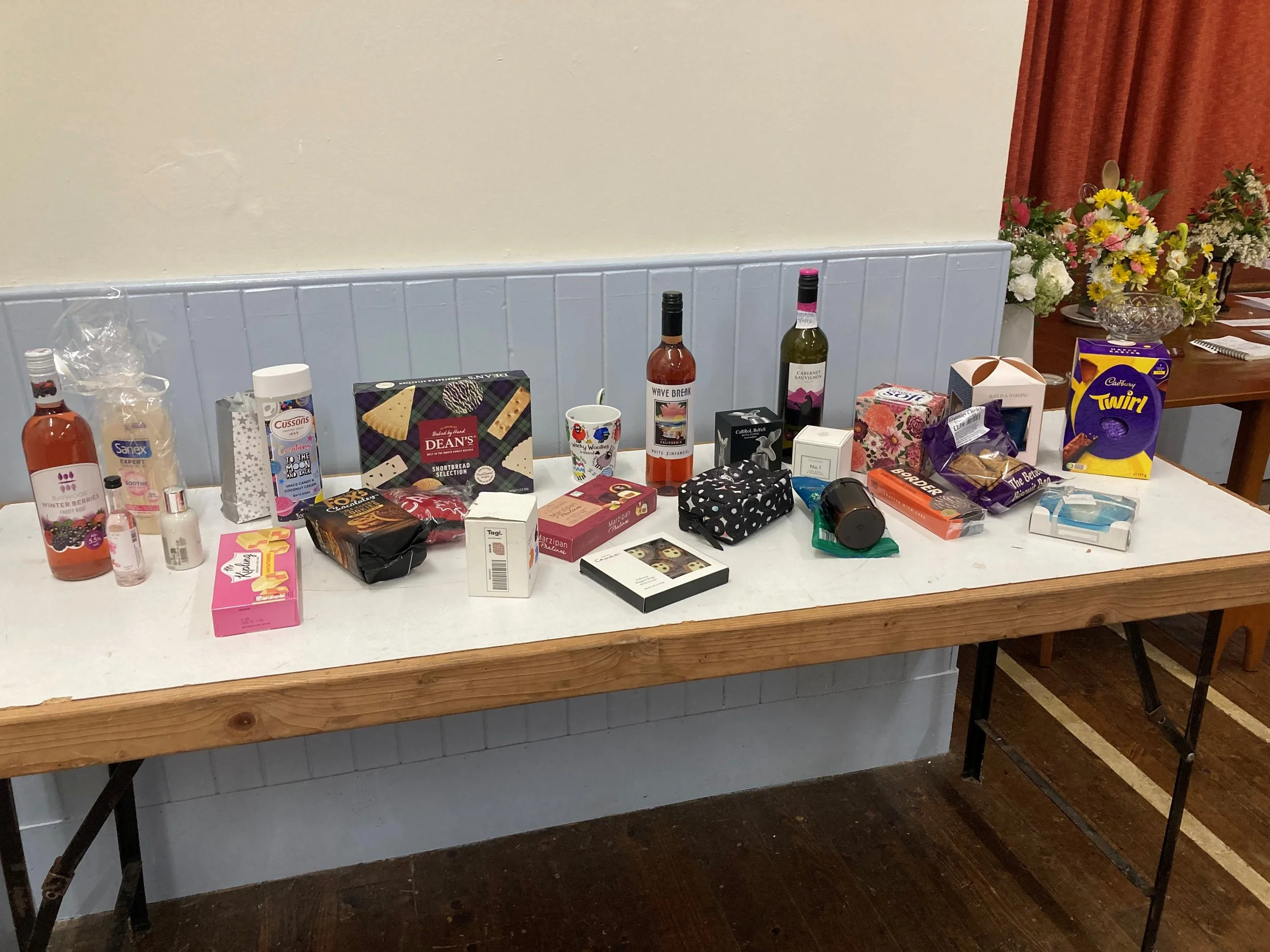
After another well supported raffle our group ‘stood up’ out of their chairs, activated their metabolism and walked purposefully out into the cool evening. Keep up the good work until our next meeting and AGM in May.