Monthly Meeting - The Great Tapestry of Scotland with Susie Finlayson
Monthly Meeting – Tuesday 10 November
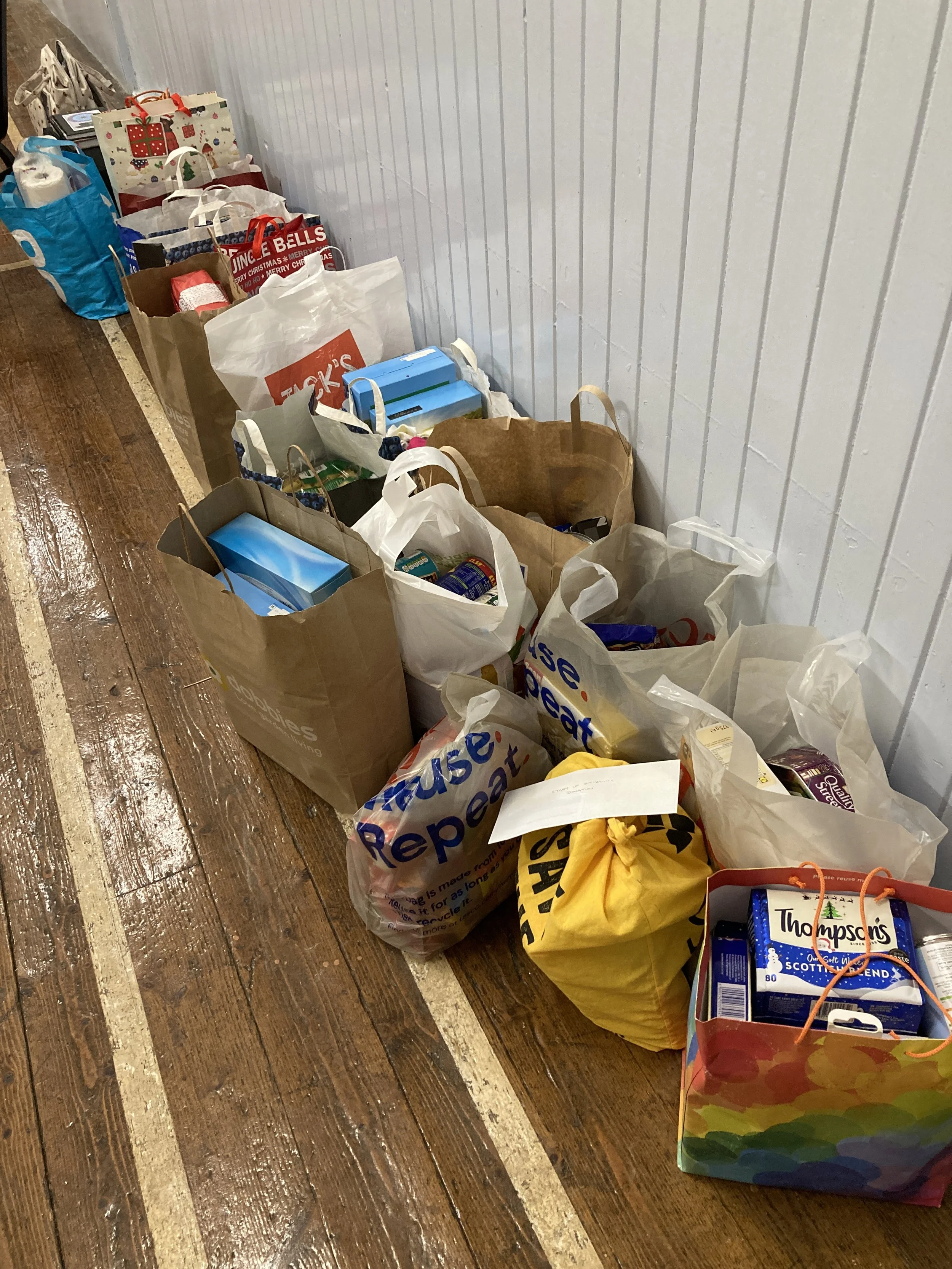
Anne Artis rang our Ruskie bell and welcomed members and guests to Thornhill Church Hall. Linda Gibson our treasurer reported healthy donations for our stewarding and from guests. We agreed to support the Royal Scottish Agricultural Benevolent Institute in their mental health initiatives with money from our raffle. Anne updated us on the progress with clearance of the Ruskie Hall which has gone very well with the help of Stan Black to whom we are very grateful. She also recognised Liz Dykes’s special birthday – remarking on how her birth prevented her mother from attending the first Gargunnock SWI meeting 80 years ago! She also reminded the members of the consultation on the UK Supreme Court Ruling and encouraged them to get their voices heard through the survey. The Christmas meal is at the Lion and Unicorn and pre-ordering and pre-payment is very helpful – Santa will visit on the night (Secret Santa gifts to be brought on the night) and we have also collected gifts for Start-Up Stirling which are very necessary. There is a spare ticket for the Fintry pantry if anyone would like to join us. Anne also mentioned the new IT set up we have, including microphones if anyone is struggling to hear the speaker.
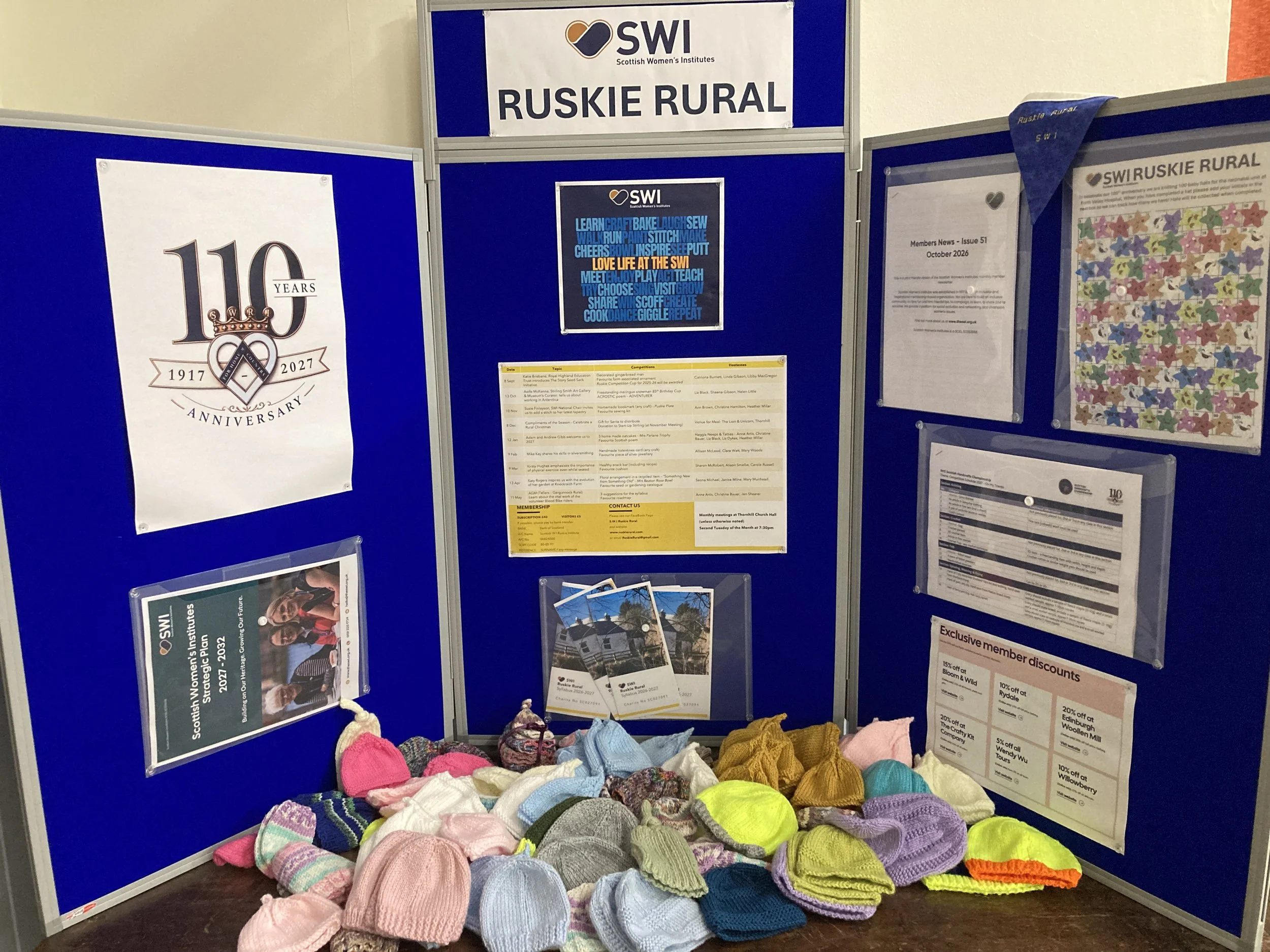
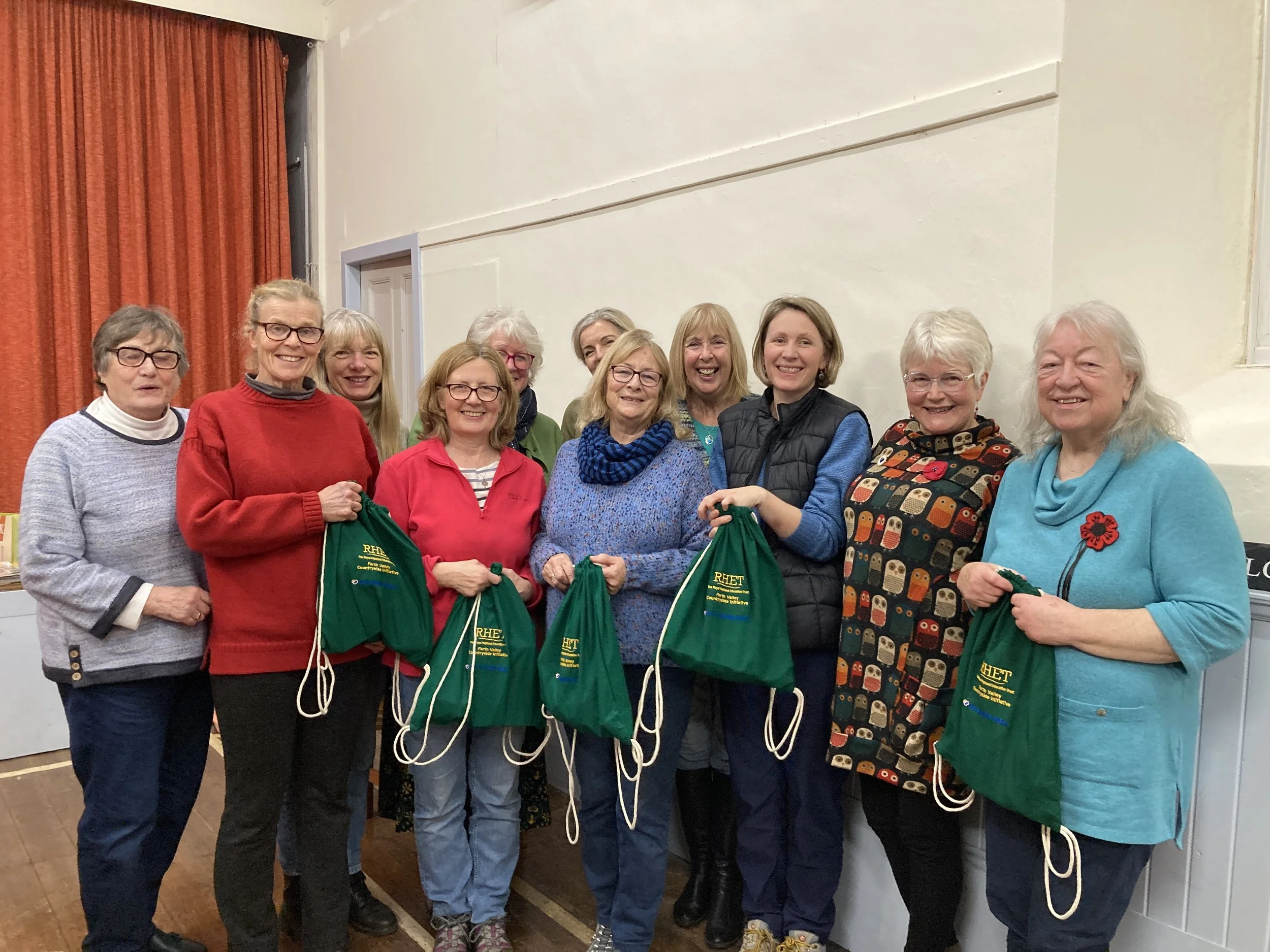
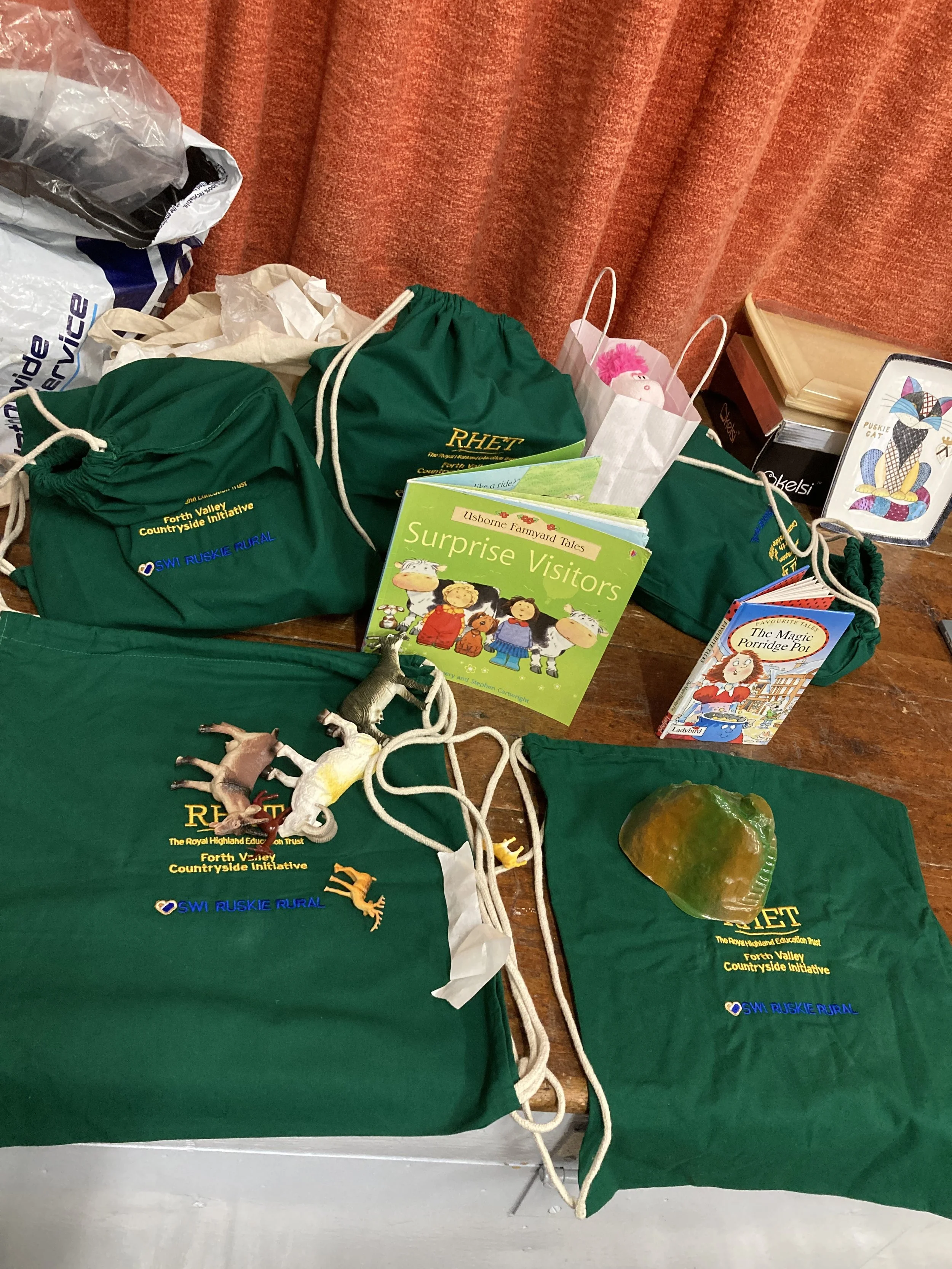
Anne also updated on the progress to knitting 100 baby hats for the neonatal unit at Falkirk – and tonight we met that target! More hats can still be knitted – a very simple pattern! Another 100th Anniversary initiative is the RHET Story Seed Sacks to bridge the education gap and help young children and toddlers to learn about farming – we have some more to do on these but we are making good progress and RHET are over the moon with what has been achieved already!
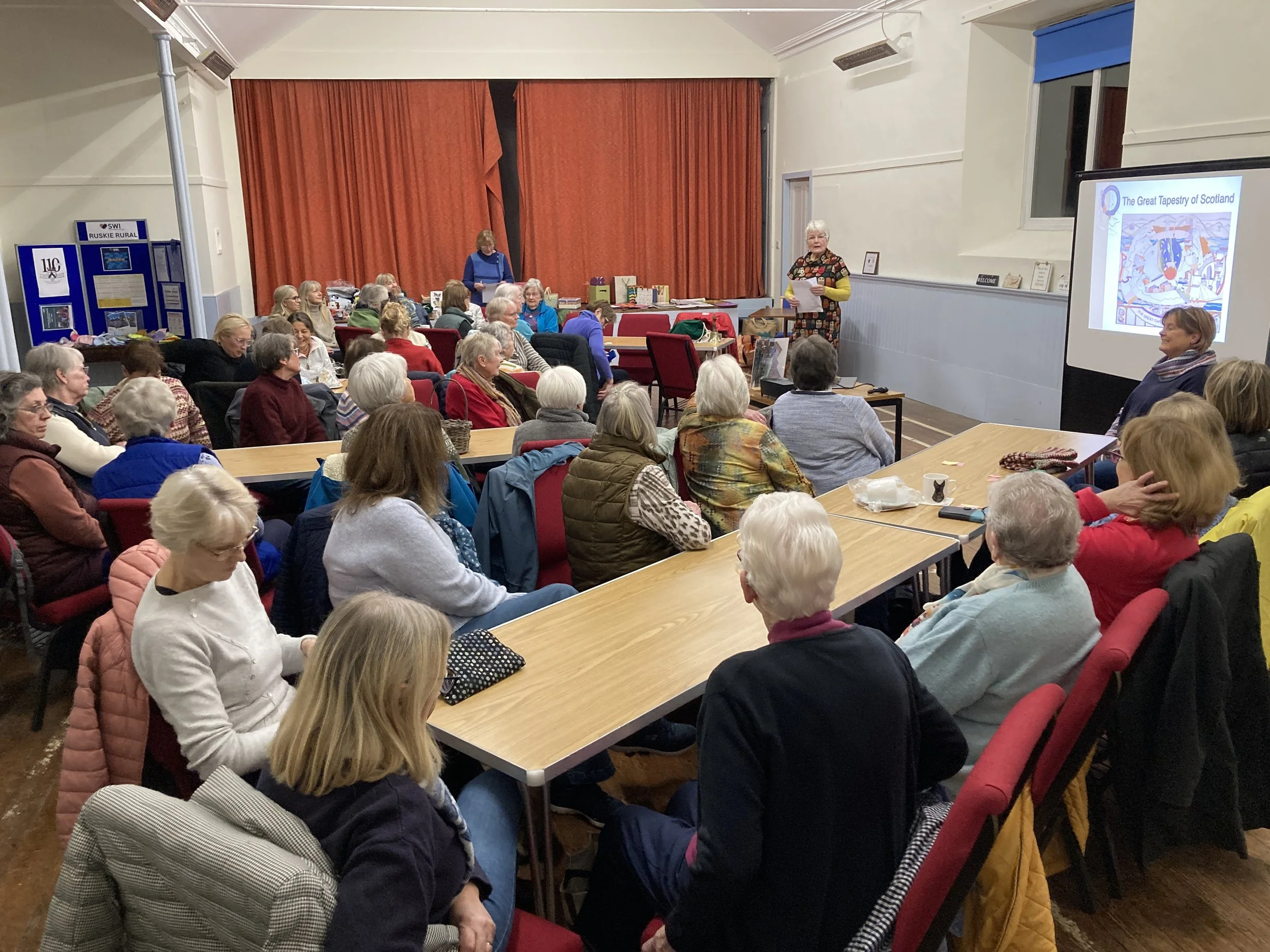
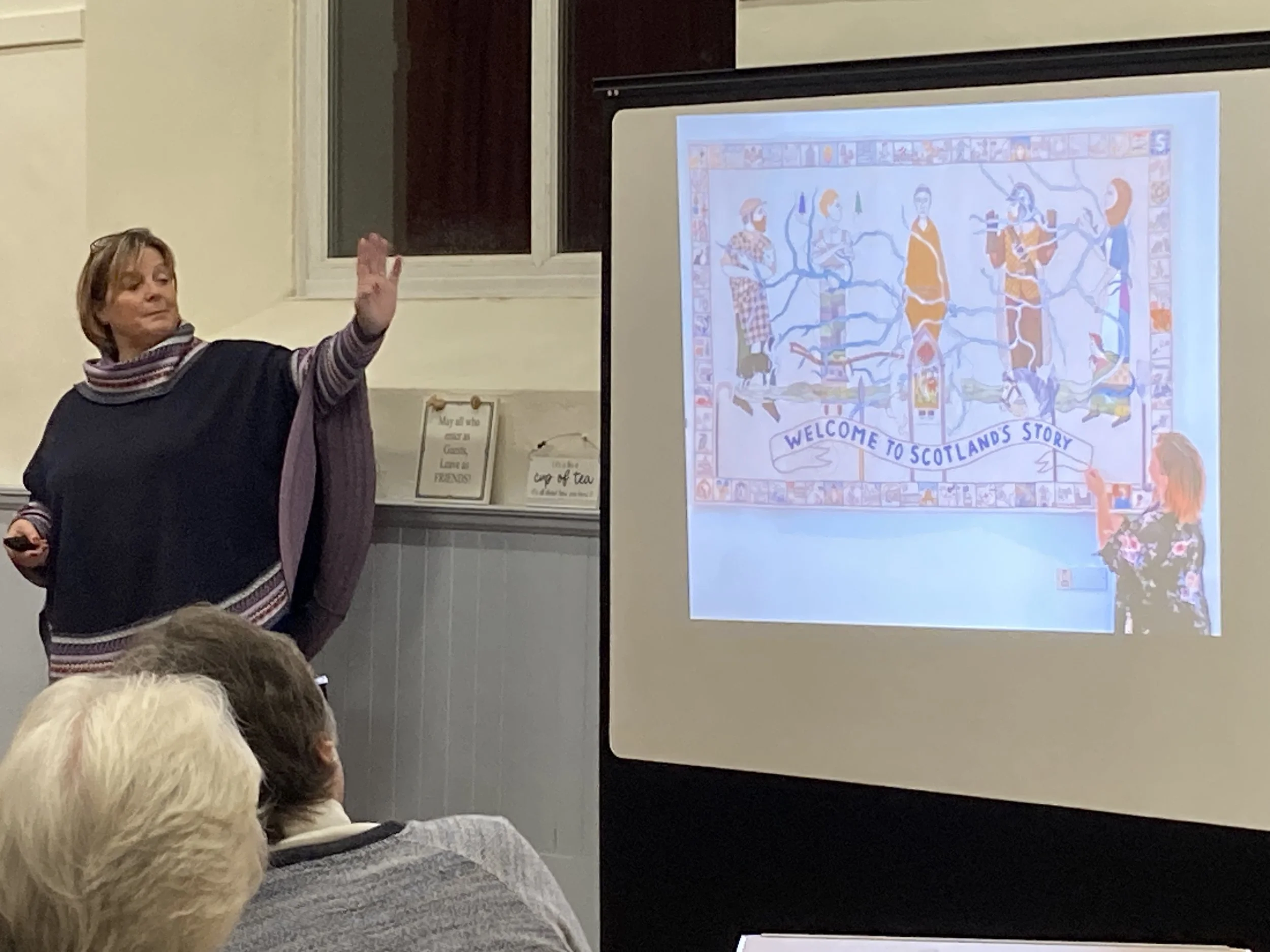
Anne then introduced Susie Finlayson our SWI National Chair who presented the story of the Great Tapestry of Scotland. Members are familiar with the Great Tapestry, some have seen it and others have even added stitches to panels (or even spun thread for it – well done Anne!)
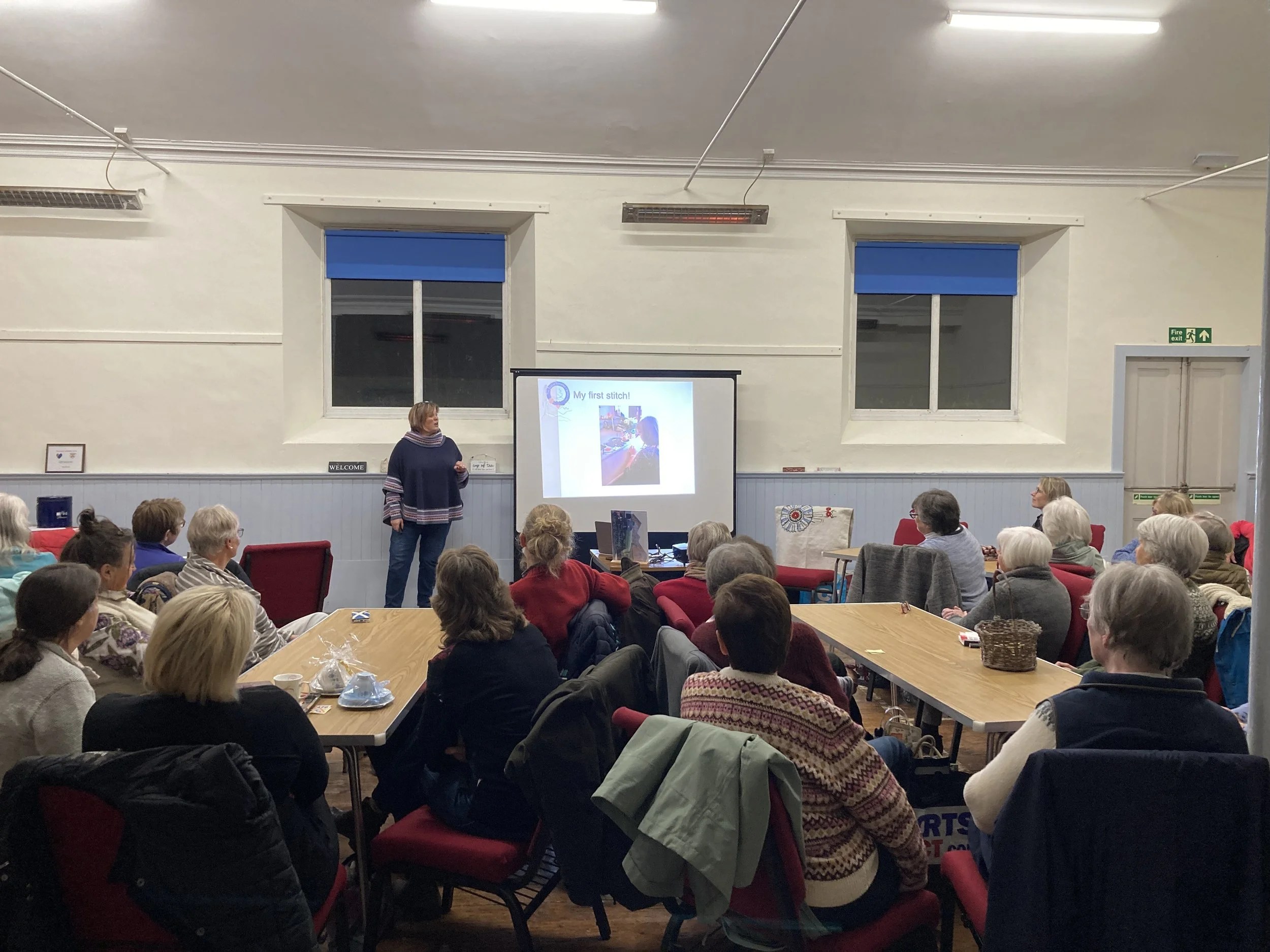
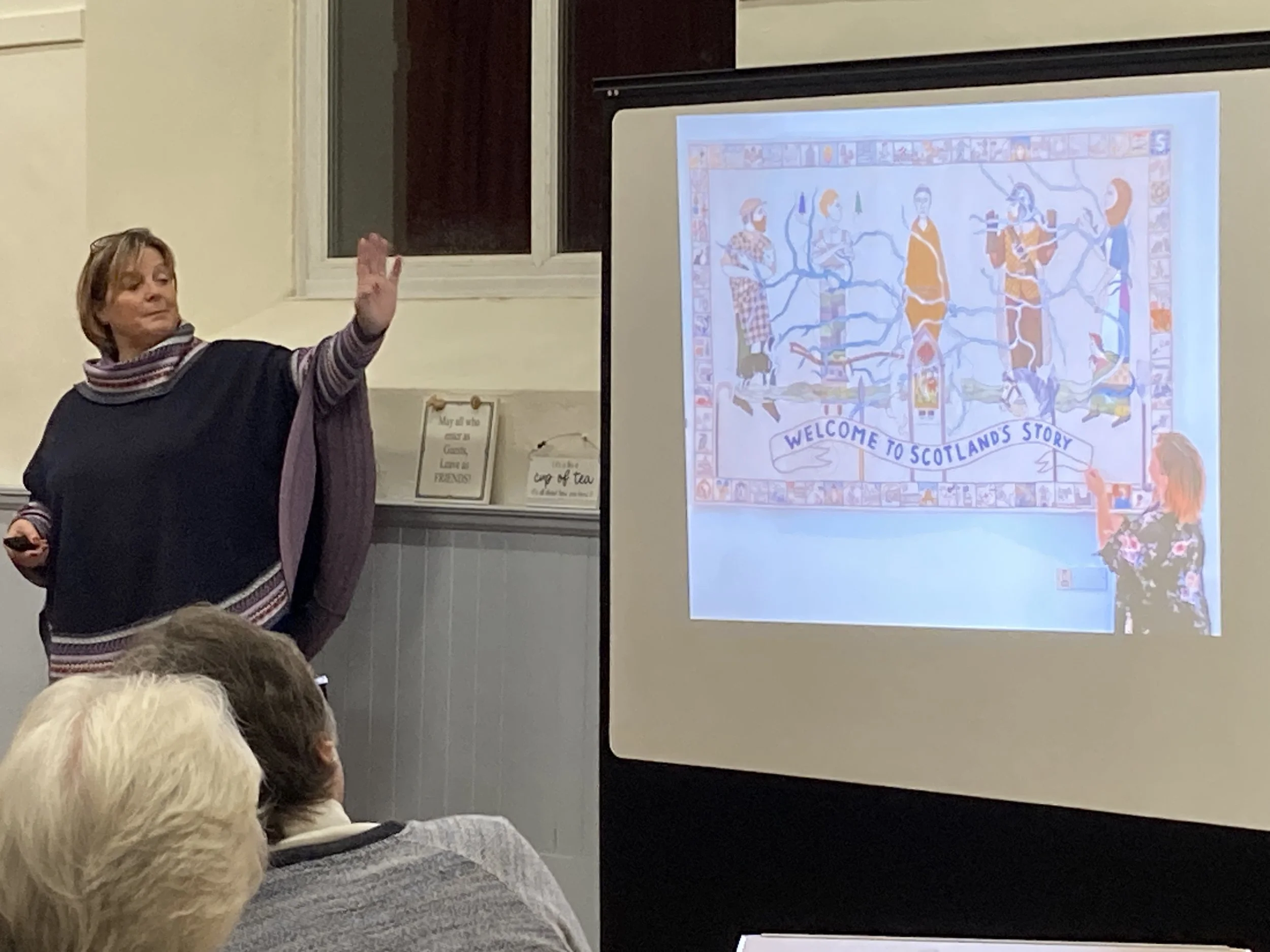
The Great Tapestry is not a tapestry but rather an embroidery, like the Bayeux Tapestry. The correct name is the “great narrative embroidery of crewel work on linen” which is 4x the size of Bayeux and although it is not the longest tapestry in the world, but it is largest by surface area. Alexander McCall Smith the author suggested the idea initially observing that pictures can tell a story as well as words. Andrew Crummy was then challenged to prepare the whole history of Scotland which was an ‘interesting’ task – Alistair Moffat historian and broadcaster also got involved but with 3 men and a great idea… a woman was needed to make it real! Dorie Wilkie of Prestonpans Tapestry did all of the organising of over 1000 stitchers across the country from individual applications to friends and family groups. At school, history was about dates and battles commissioned by landed gentry and recorded by monks but the history of Scotland starts with the formation of rocks and the ice age and is told through the story of the people who worked through history, including a lot of women’s voices who are usually not heard. Panels are made by lots of different kinds of people, including Susie’s mum who is a knitter at heart but traced the original designs on linen and instructed Susie to participate and decide whether she should get involved! Tracing onto fresh linen with a permanent marker is quite nerve wracking and takes alcohol to erase mistakes (on the linen, not drinking!). Packages were then dispatched to the stitchers – the linen pattern, a photograph of the potential coloured design with some guidelines for outlines and title text. The stitchers took 6 months to start their work and Dorie forced Susie and her mum to learn to stich on Christmas Day, and to unpick on Boxing Day! The wool allocation was a bit hit or miss and an evolving process colour numbers are ingrained on Susie’s memory. Translating the pattern to embroidery resulted in improvisations including a yellow duck instead of a raven, and the first bars of James Scott Skinners Cradle Song.
Every panel which was returned completed was 4 inches too short as they were not under tension all the time but done on individual hoops at different tensions so they had to be stretched to size using wooden frames and carpet gripper which is vicious and taught us that spit removes blood from fabric! After stretching, the panels needed to be wet to relax, and then airdried flat and backed (using a sewing machine and unbleached calico and a weighted channel to keep them flat). Panels range from MacBeth to the Miners Strike (stitched by three generations of a mining panel who added personal touches), to a Washer Woman with details of a wet pinnie and a run in her stocking! There are lots of other wee additions to the tapestry which personalise panels through stitchers ‘tags’ and personal stories including Susie’s addition of a tiny helicopter in the sea off Fair Isle on panel 126.
The significant panels stop at 1999 with the formation of the Scottish Parliament but Andy Murray won Wimledon in 2013 so that was added in! The original drawings and finished panels are not identical as when they were stitched there was no Zoom or Facetime so occasional telephone calls clarified key points including the difference between Fair Isle and Shetland jumpers! The tapestry is now at a permanent home in Galashiels and is well worth a visit but takes more than a single day trip. A final panel welcomes visitors to the exhibition and Susie was chief stitcher on this, with a remit to create content for the border squares with 1000 people involved in stitching a single panel. Another panel for the Galashiels interchange was challenged to get 2000 stitchers– including one from Queen Camilla on the day of her investiture at St Giles. The photograph of this ended up on the Royal Family Instagram page with 13m followers!
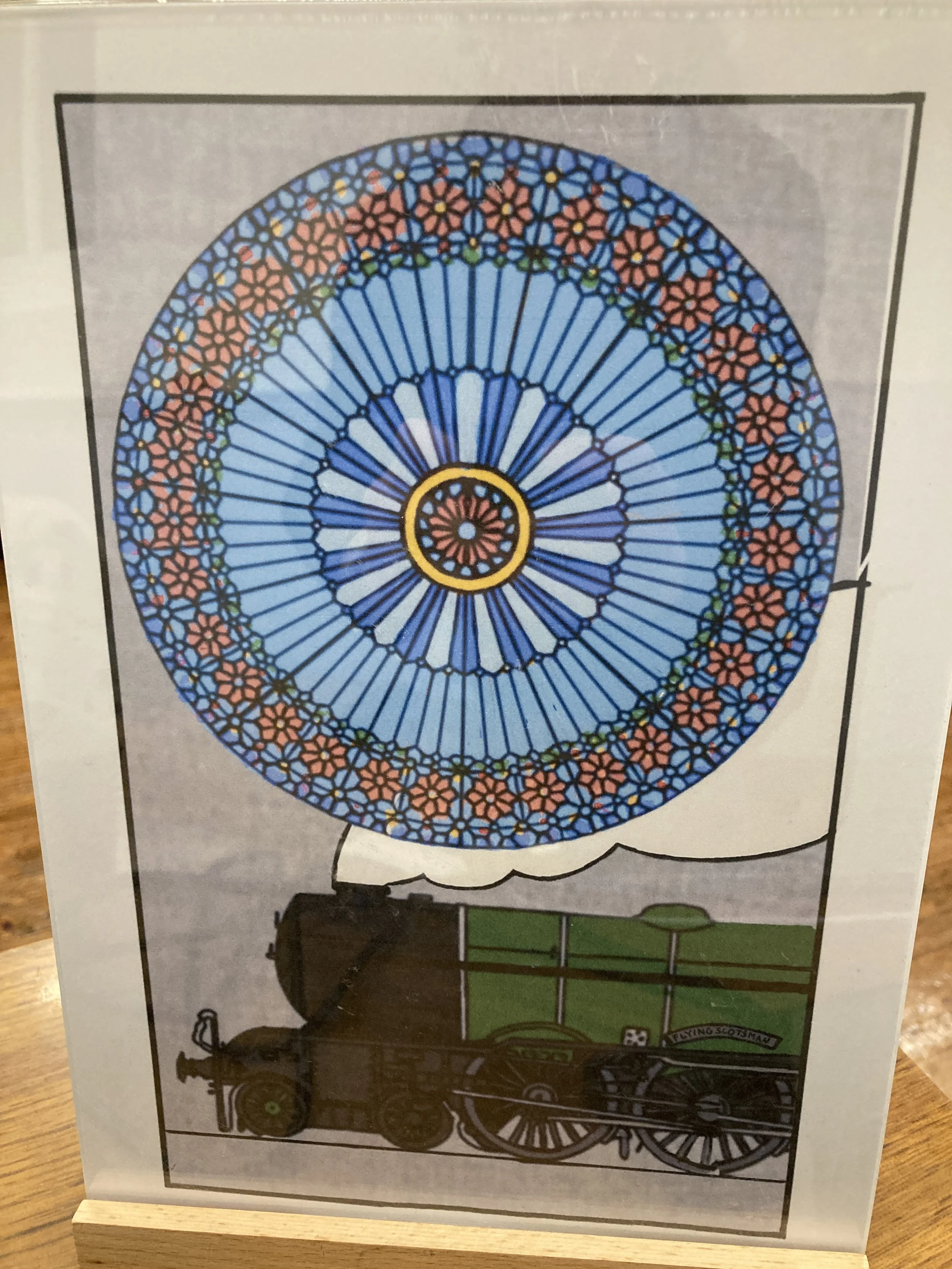
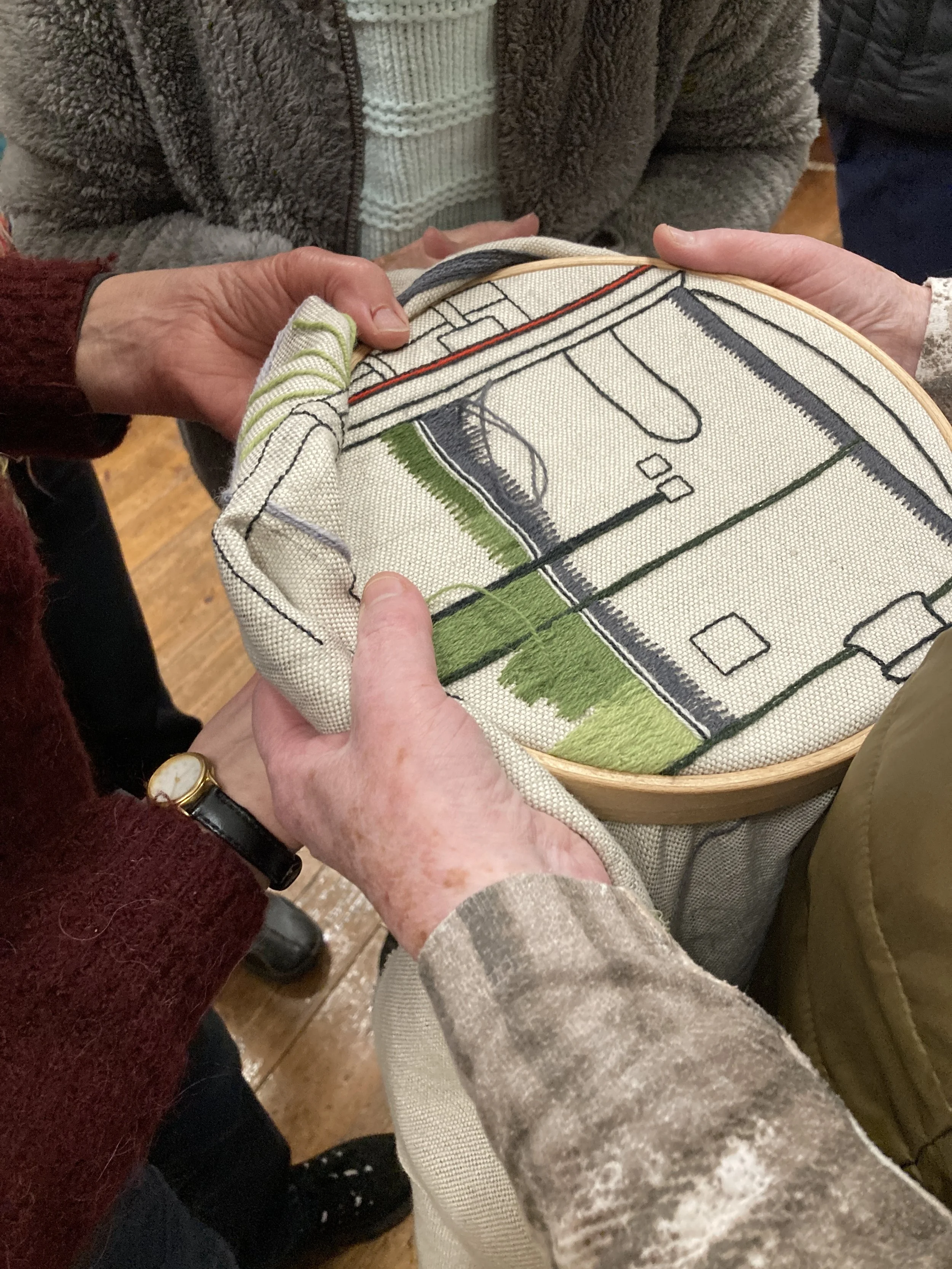
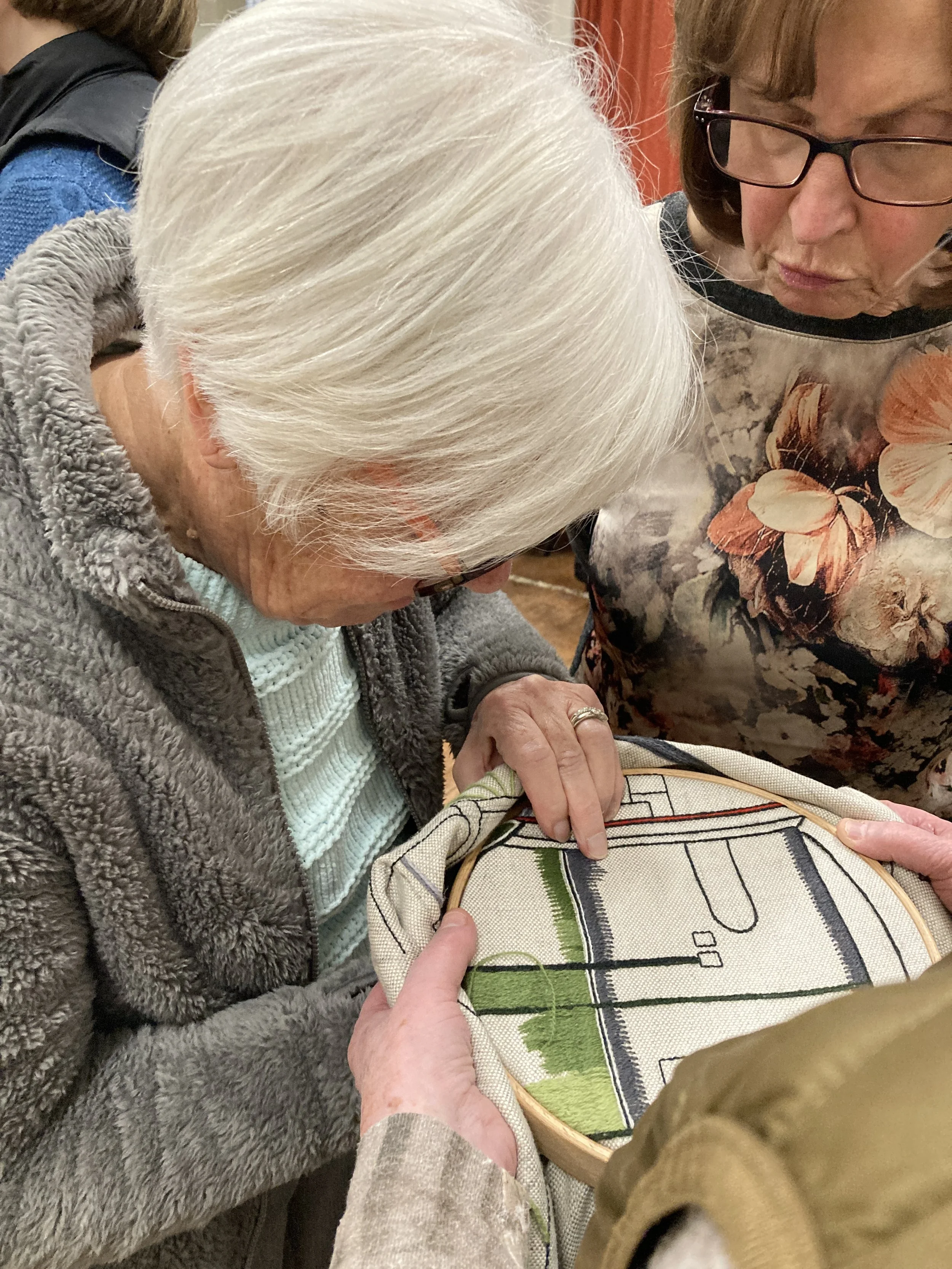
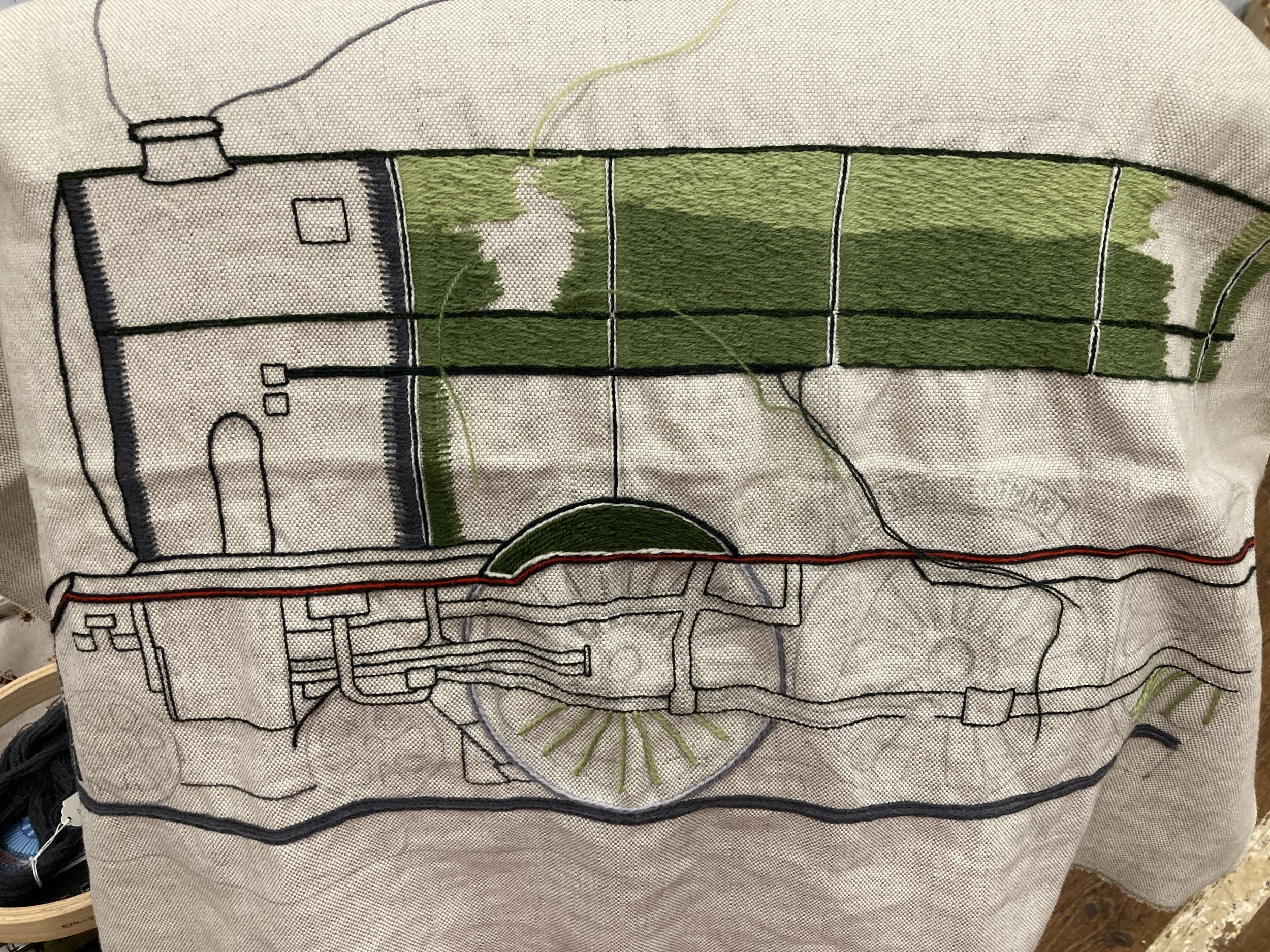
Now in 2026 Susie is teaching embroidery and tapestry and has embarked on a series of 5 stitched panels for Waverley Station depicting the ceiling of the station and famous landmarks which Members and guests had the opportunity to add a stitch and were minded to ‘sign the book’ before they left!
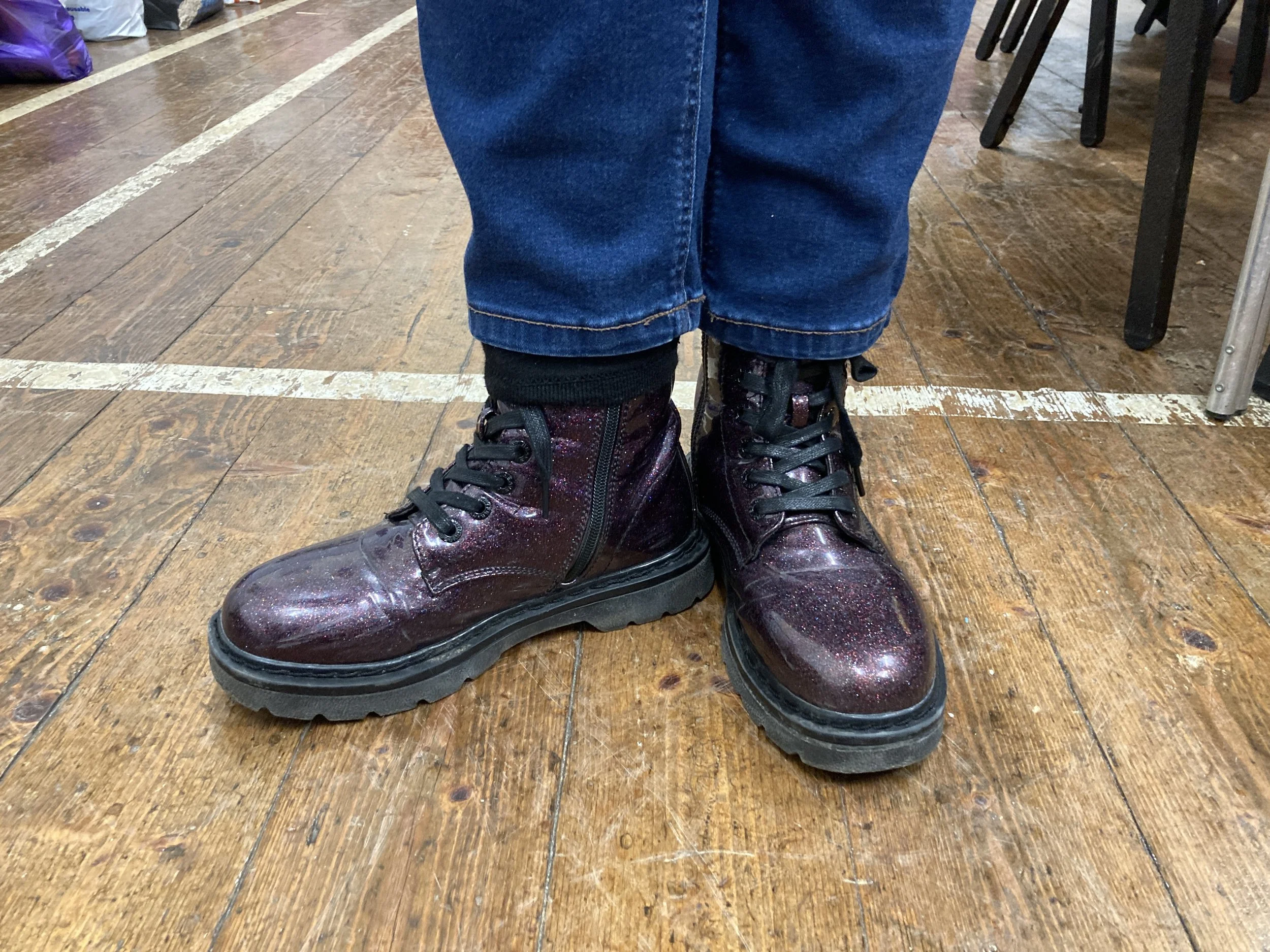
Susie’s storytelling of her tapestry journey was informative and entertaining, but no visit would be complete without the opportunity to admire her ‘Susie-Shoos’ – this time a pair of sparkly boots!
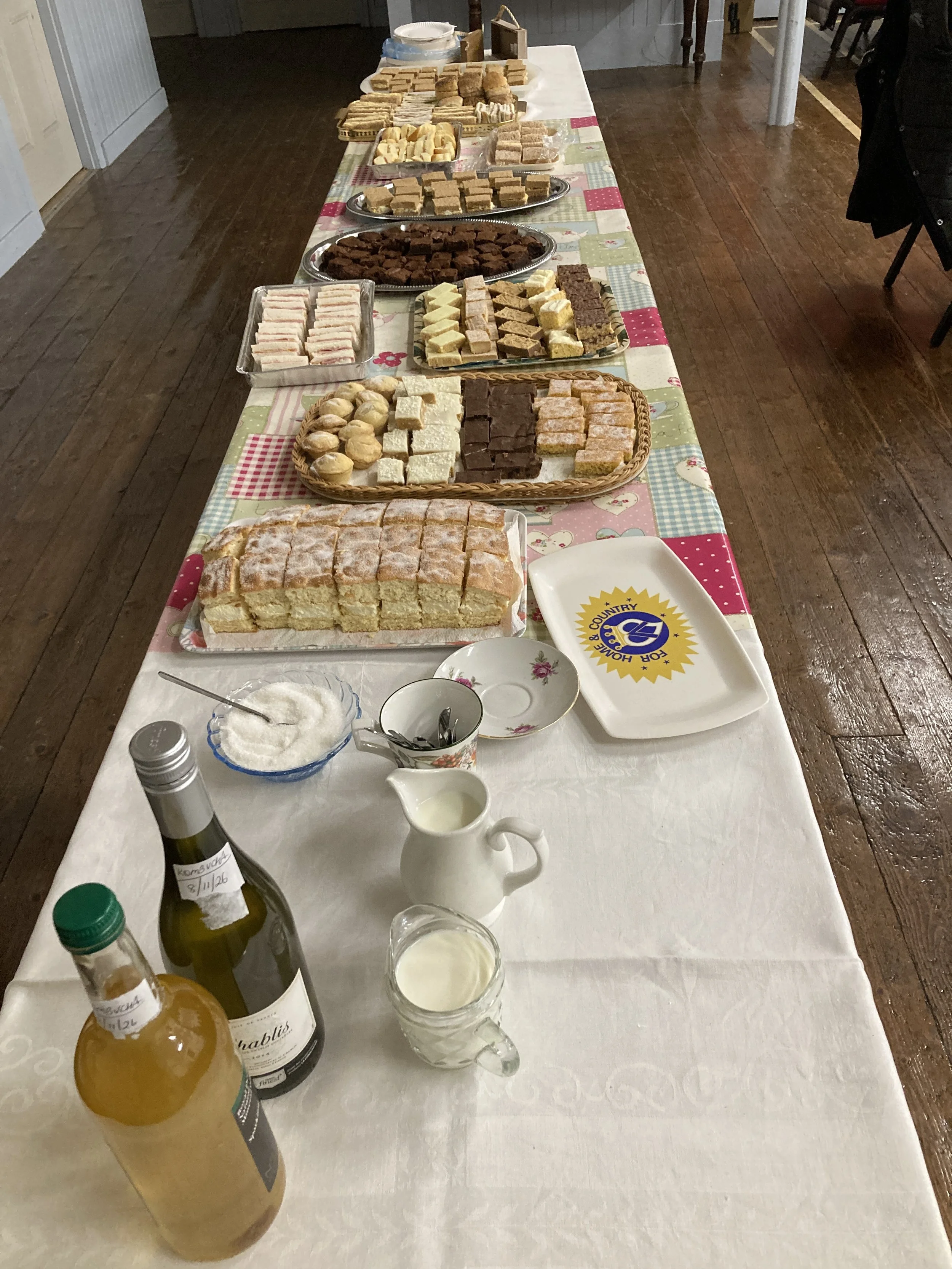
After another super Ruskie supper, including home made Kombucha from Ann Brown we added stitches to the Waverley Tapestry, admired the RHET bags, and built up the Start-Up Stirling pile.
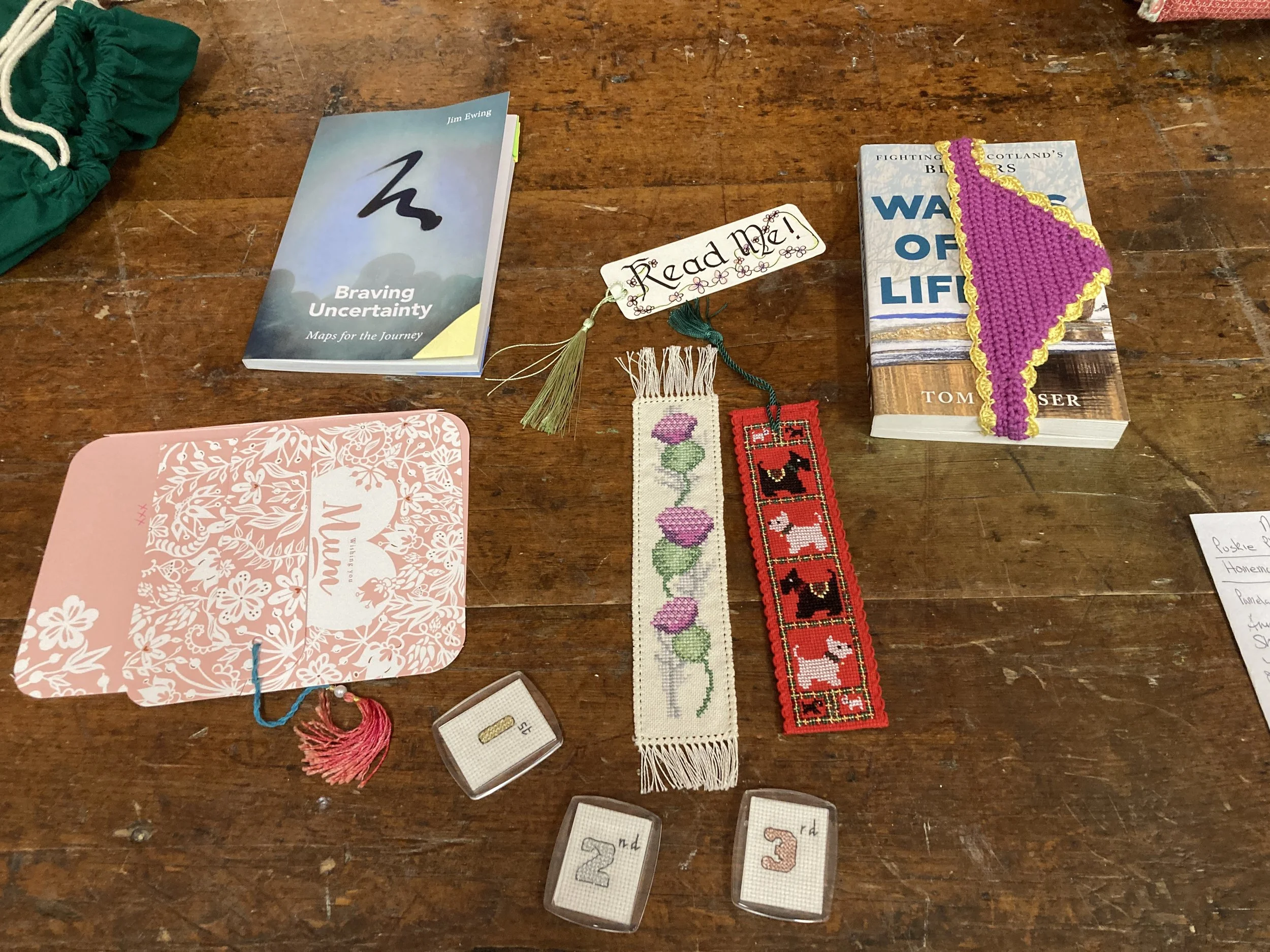
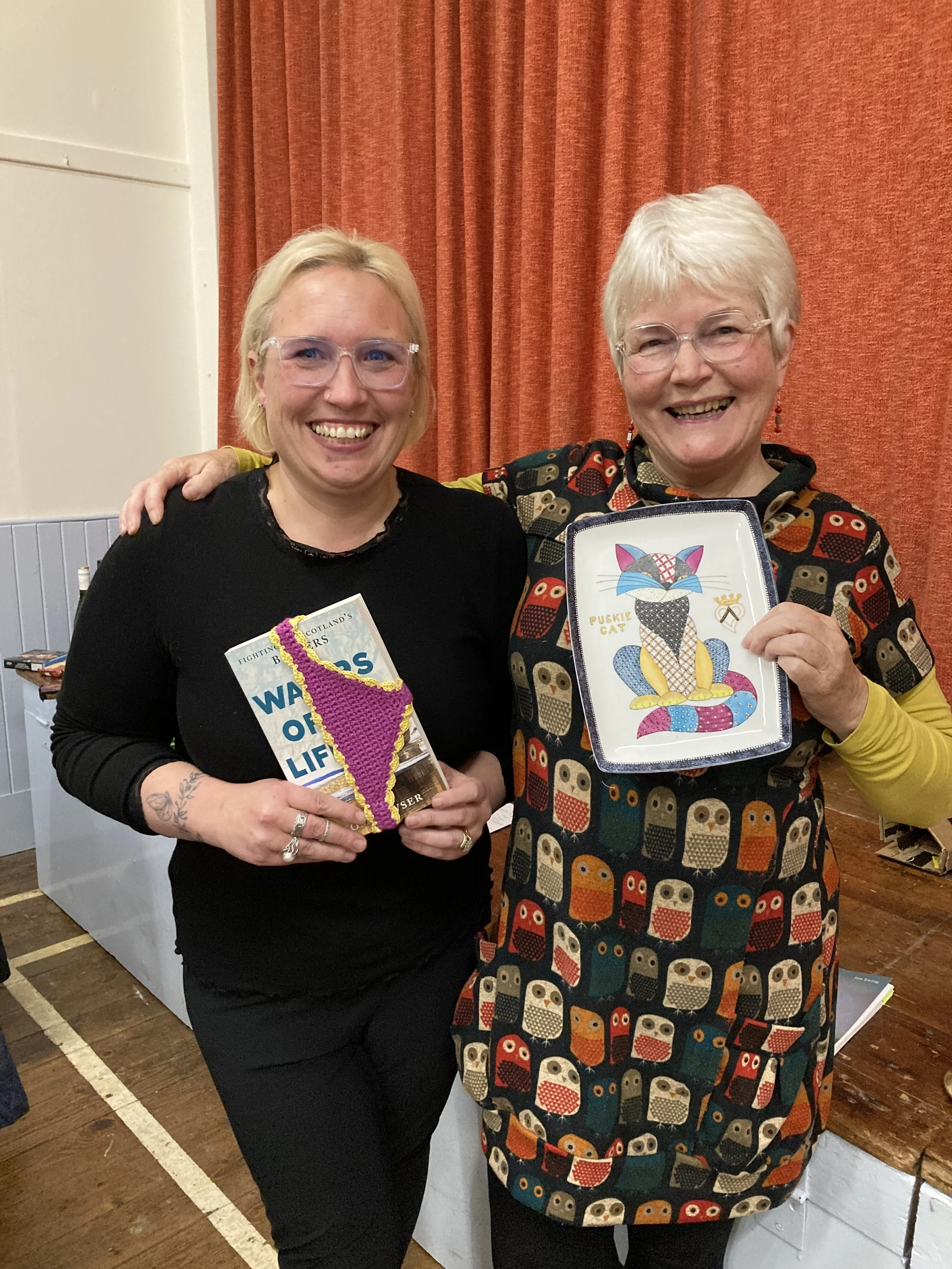
COMPETITIONS - Homemade bookmark (any craft) – Puskie Plate; 1) Sharon McRobertt 2) Janet McLay 3) Pamela Deans
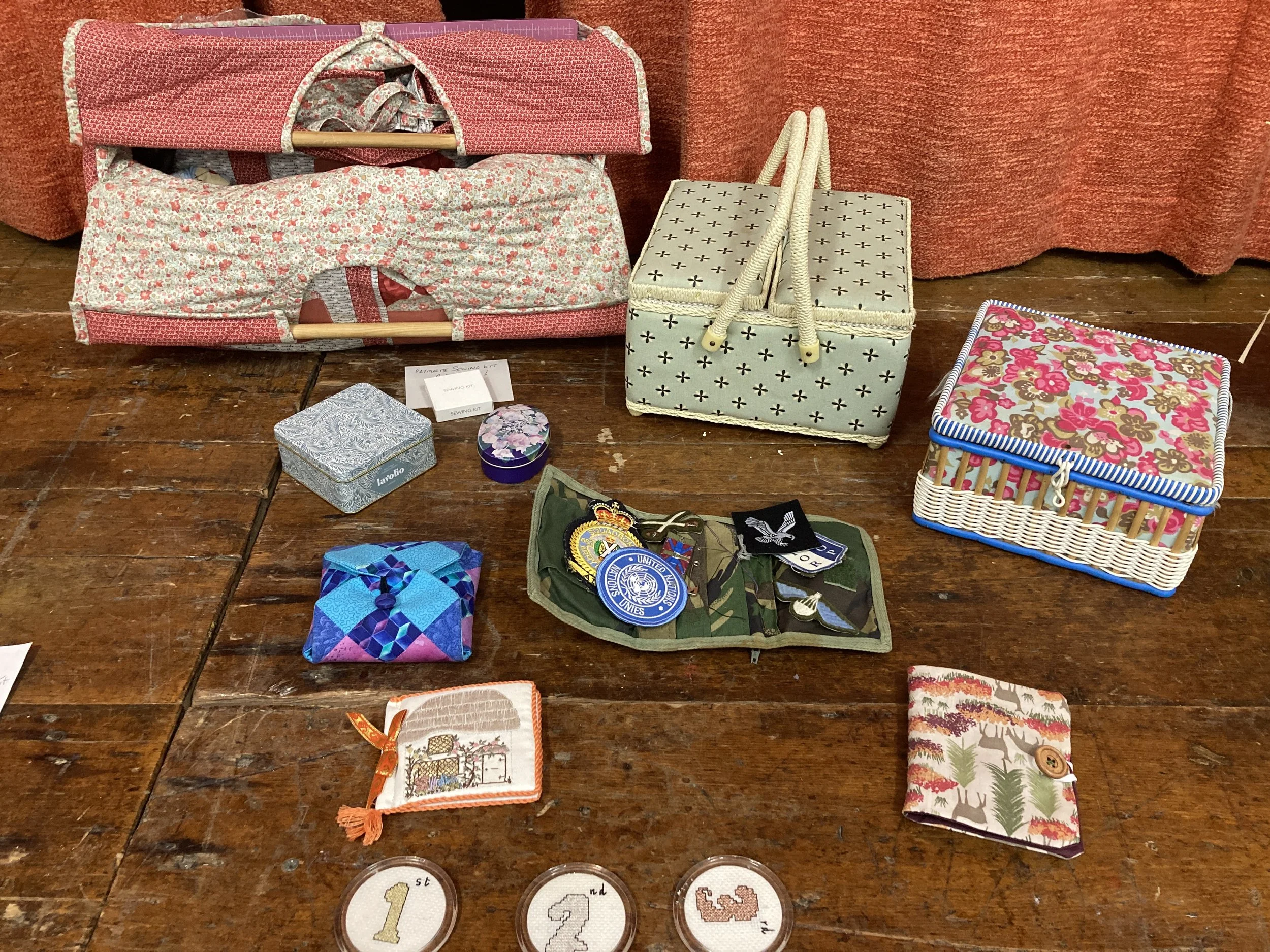
Favourite sewing kit 1) Elizabethg Dykes 2) Pamela Deans 3) Allison Mcleod
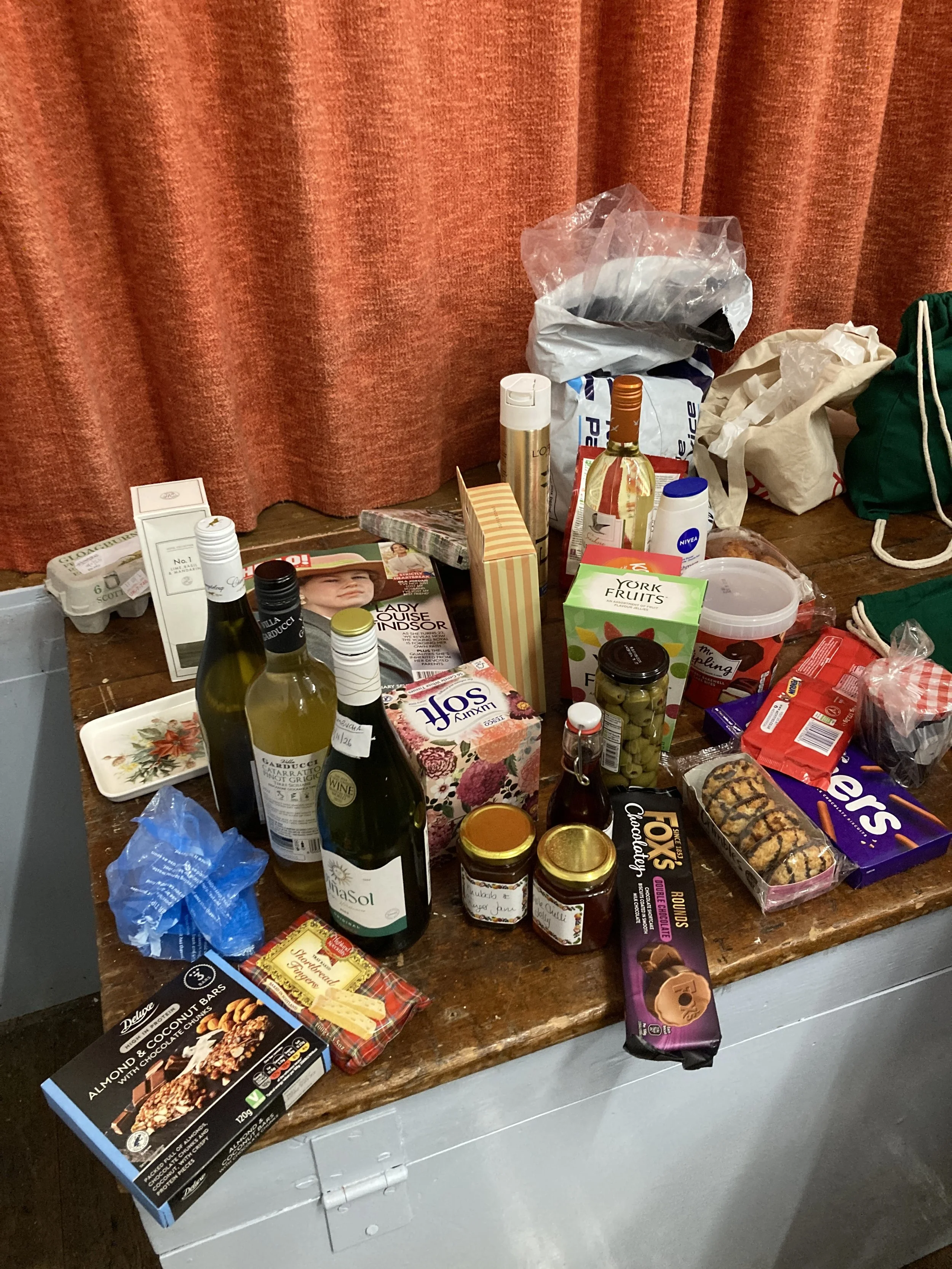
After a generous raffle, Susie reflected that bottling the marvellous, welcoming and enthusiastic atmosphere at Ruskie would be wonderful to share with other Institutes! Members then headed out into chilly night but warmed by the glow of another Ruskie evening full of fun, friendship and learning.